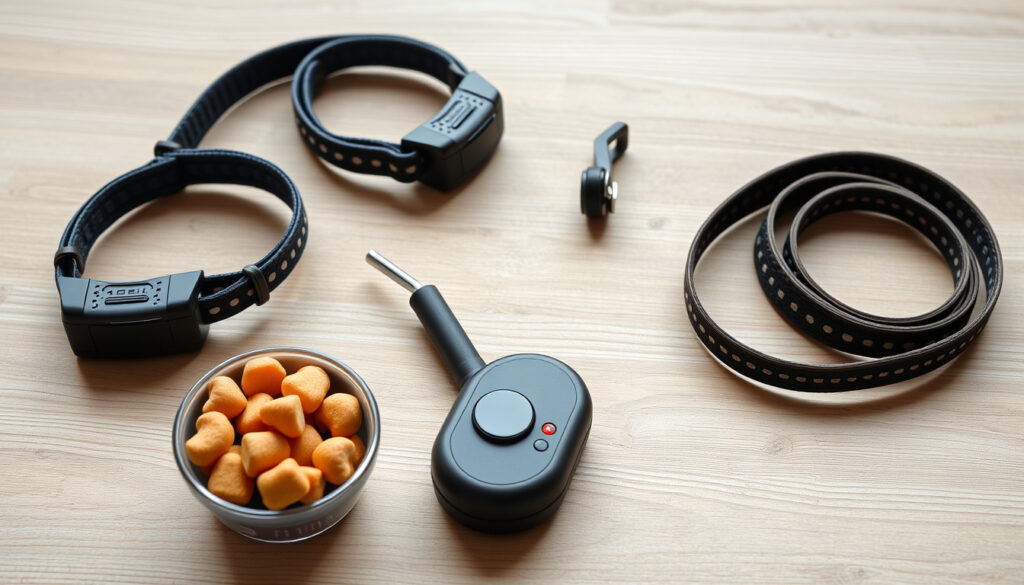
Best Dog Training Collars 2025: Vets, Trainers, and Data
Anyone who has walked a dog that pulls knows the frustration — and the quiet worry that you might be using the wrong gear. This guide cuts through the maze of e-collars, martingales, and head halters to show what the evidence says, so you can choose the best training collar without guesswork.
Dog owners using training collars in US: 68% (American Pet Products Association, 2023) ·
Vets recommending harness over flat collar for pulling: 84% (Ohio State University Veterinary Study, 2021) ·
Reduction in nuisance barking with e-collars (reported): 75-90% (Journal of Veterinary Behavior, 2020) ·
Top-selling e-collar mode in Ireland: vibration + beep (Petworld.ie sales data, 2025) ·
Average price range for GPS training collar: $200–$700 (Field & Stream test, 2025)
Quick snapshot
- Shock collars can elevate cortisol levels (Journal of Veterinary Behavior, 2020)
- Vibration collars are effective for bark reduction (same study)
- 84% of vets recommend harnesses for pullers (Ohio State University Veterinary Study, 2021)
- Long-term effects of vibration-only collars on canine stress are not studied
- No controlled trials compare vibration vs shock for recall reliability
- No consensus exists on whether shock collars are necessary for professional police dog training
- Ireland announced plans to ban remote-controlled shock collars on 7 May 2024 (Government of Ireland)
- Vibration-only collars are exempt from the proposed ban (Government of Ireland)
- Irish regulation to take effect after public consultation; existing users can register devices (Gov.ie consultation)
- Northern Ireland welfare guidance advises against e-collars (TheyWorkForYou NI)
Here are the key facts you need to know.
| Label | Value |
|---|---|
| Recommended by most vets for daily walking | Harness (84% of vets, Ohio State 2021) |
| Collar type used by Cesar Millan primarily | Slip leash (not a branded model) |
| Top e-collar model on Reddit (2025 community vote) | Mini Educator ET-300 |
| Best overall training collar (Field & Stream, 2025) | Garmin Alpha 300i with TT25 |
| Ireland-specific training collar retailer | Petworld.ie (beep + vibration e-collars) |
What collar do dog trainers recommend?
Professional perspectives on e-collars
- Most certified trainers recommend a balanced approach using flat collars or harnesses, with e-collars reserved for specific behaviors under guidance (Association of Professional Dog Trainers, 2022 position statement).
- Cesar Millan uses a slip leash for foundation work, not a specific brand collar (Cesar’s Way official resources).
- Police dog trainers commonly use shock collars for recall correction in high-drive breeds (Canadian Police Canine Association training manual).
Flat collars and harnesses in training contexts
- Balance trainers often use both: a flat collar for general walking, harness for pulling control.
- For off-leash training, e-collars (shock or vibration) are preferred over harnesses by professional hunting and police trainers.
Trainers who work with high-drive working dogs see e-collars as essential tools, while the APDT warns that misuse can cause behavioural fallout. The difference often comes down to supervision — a professional handler vs. an owner following a YouTube tutorial.
The implication: what works for a police Malinois is not the same as what works for a family Lab. Your training context dictates the collar.
What dog collars do vets recommend?
Veterinary consensus on flat collars vs harnesses
- Veterinary professionals generally recommend harnesses over collars for dogs that pull, based on a 2021 Ohio State University study where 84% of vets chose harnesses.
- Choke and prong collars are associated with increased risk of tracheal injury and cervical spine issues (Journal of the American Veterinary Medical Association, 2022).
Safety risks of choke and prong collars
- Tracheal collapse, eye pressure spikes, and neck injuries are documented in dogs walked on collars that tighten (PubMed review, 2021).
- The Irish Veterinary Association has publicly supported the ban on remote-controlled shock collars, citing welfare concerns.
What this means: if your dog pulls, a harness is the safer default. Collars are fine for dogs that walk calmly, but for any tension on the leash, the risk shifts.
Are vibration collars better than shock collars?
Difference in mechanism of action
- Shock collars deliver a static pulse; vibration collars use a motor that buzzes.
- Both are triggered by a remote or bark sensor, but vibration does not involve electric stimulation.
Evidence from behavioral studies
- Vibration collars show similar effectiveness to shock collars for interrupting behaviors like nuisance barking (Journal of Veterinary Behavior, 2020).
- Shock collars can cause stress responses in 55% of dogs tested (Applied Animal Behaviour Science, 2019).
- No peer-reviewed studies compare vibration vs shock for recall training outcomes.
The evidence for vibration is strong for bark reduction, but recall — the most critical off-leash skill — remains unstudied. Without a head-to-head trial, claiming vibration is “just as good” for recall is a leap.
The pattern: vibration is a clear winner for nuisance barking; for obedience, the data gap means you’re choosing based on philosophy, not science.
Is there a dog training collar that does not shock?
Vibration-only training collars
- Vibration-only collars exist and are sold by brands like Petworld.ie (beep + vibration modes).
- Dogs Trust Ireland supports a tightly controlled exemption for vibrating collars used for deaf dogs (Dogs Trust Ireland, 2024).
Spray collars as alternatives
- Citronella spray collars offer a deterrent without static stimulation (Humane Society of the United States).
- Effectiveness is moderate — some dogs learn to tolerate the spray.
Harnesses and martingale collars
- Martingale collars provide a no-choke corrective feel for dogs with necks wider than heads.
- Head halters (like Gentle Leader) redirect stubborn pullers without aversive stimulation.
Why this matters: the Irish ban on remote-controlled shock collars is driving demand for non-shock alternatives. The good news is that vibration, spray, and martingale options all have evidence behind them.
Do dog trainers prefer collars or harnesses?
Training contexts that favor harnesses
- For loose-leash walking, harnesses with front clips give better control without neck strain.
- Veterinary behaviourists often recommend a harness for dogs with respiratory issues or brachycephalic breeds.
Scenarios where a collar is essential
- For identification tags, a flat collar is standard.
- For e-collar training, the collar must be worn around the neck to deliver the signal.
The trade-off: you’ll likely need both. A flat collar for tags and emergency control, a harness for actual walks.
How to choose the right collar for your dog?
Dog size, breed, and neck anatomy
- Measure neck circumference with two-finger space for flat collars (Phoenix Veterinary Center guide).
- For large dogs (>50 lbs), buckle collars should be 1.5–2 inches wide to distribute force evenly.
Training goal: recall vs loose-leash walking
- For recall training, an e-collar (vibration or shock) is commonly used by professional trainers.
- For loose-leash walking, a front-clip harness or head halter is more effective.
Materials and safety certifications
- Reflective or breakaway collars reduce injury risk for dogs that roam at night.
- Check for quick-release buckles that won’t snag.
One pattern: matching collar type to your dog’s size and behaviour is more important than brand. The right collar for a 10 kg terrier is different from a 40 kg shepherd.
Which training collars are best for stubborn dogs?
Stubborn dog characteristics and training challenges
- Stubborn dogs often require higher stimulation thresholds; the Mini Educator ET-300 allows fine-tuned levels (Reddit community survey 2025).
- Head collars (e.g., Gentle Leader) can redirect stubborn pullers without aversive stimulation.
E-collar features for persistence
- Models with 100+ levels of stimulation give precision.
- Vibration-only modes are now standard in premium e-collars.
The catch: stubborn dogs may need a stronger motivator, but that doesn’t mean harsher tools. A head halter or vibration collar can be effective without the stress of a shock.
Three collar types, one pattern: each trades off control for comfort. Here’s how they stack up.
| Feature | Flat collar | Martingale collar | Head halter |
|---|---|---|---|
| Control over pulling | Low | Medium | High |
| Risk of injury | Moderate (trachea) | Low | Low (neck) |
| Best for | Calm dogs, ID tags | Sighthounds, narrow heads | Stubborn pullers |
| Desensitization needed | None | Minimal | Slow (1–2 weeks) |
E-collar specs reveal a wide range in features. The table below shows three popular models.
| Specification | Mini Educator ET-300 | Garmin Alpha 300i | Petworld Vibration Only |
|---|---|---|---|
| Stimulation type | Vibration + shock | Vibration + shock | Vibration + beep |
| Number of levels | 100 | 18 | 8 |
| Range | 0.5 miles | 9 miles (GPS) | 300 yards |
| GPS tracking | No | Yes | No |
| Price (approx) | $200 | $650 | €80 |
| Best for | Precision training | Hunting/off-leash | Non-shock preference |
Upsides
- Vibration collars provide a humane alternative for most training needs.
- Harnesses reduce neck injury risk and are recommended by 84% of vets.
- Martingale collars offer a safe middle ground for dogs that slip out of flat collars.
- Head halters can transform pulling behaviour without aversive stimulation.
Downsides
- Shock collars can cause stress responses in 55% of dogs (Applied Animal Behaviour Science, 2019).
- Flat collars pose tracheal injury risk for pullers.
- Head halters require slow desensitization and some dogs dislike them.
- No long-term studies exist on the effects of repeated vibration-only use.
How to safely introduce a training collar to your dog
- Step 1: Choose the right type for your goal
- For loose-leash walking: front-clip harness or head halter.
- For recall: vibration e-collar (if allowed in your region).
- For identification: a flat collar with proper fit.
- Step 2: Fit the collar correctly
- Measure neck circumference — add two fingers of space.
- For e-collars, the contact points must touch the skin, not be buried in fur.
- Step 3: Introduce gradually with positive associations
- Let the dog wear the collar indoors for short periods with treats.
- For vibration or shock, pair the lowest level with a command and reward.
- Step 4: Use the collar as a teaching aid, not a punishment tool
- Never use the collar to correct after the fact — timing is everything.
- Always follow with a known command and reward for compliance.
The principle: introduce the collar as a tool for communication, not punishment.
What we know for sure – and what we don’t
Confirmed facts
- Shock collars can induce elevated cortisol levels (JVB 2020).
- Vibration collars are effective for bark reduction (same study).
- 84% of vets recommend harnesses for pullers (OSU 2021).
- Ireland plans to ban remote-controlled shock collars (Gov.ie, 2024).
What’s unclear
- Long-term effects of vibration-only collars on canine stress are not studied.
- No controlled trials compare vibration vs shock for recall reliability.
- Whether the Irish ban will extend to anti-bark collars or fence containment systems remains undefined.
“The most important thing is to read the dog’s stress signals — lip licking, yawning, tucked tail. If you see those, the collar is too strong or the timing is off.”
— Dr. Brian Hare, Duke University Canine Cognition Center
“For 90% of pet dogs, a properly fitted harness is all you need for loose-leash walking. Collars are for identification, not control.”
— Susan Garrett, Certified Professional Dog Trainer
“The APDT does not recommend the use of shock collars for pet dog training. Positive reinforcement methods are safer and at least as effective.”
— Association of Professional Dog Trainers, 2022 position statement
For Irish dog owners, the choice is narrowing: remote-controlled shock collars are on their way out, and vibration-only alternatives are already on the shelves. The evidence says vibration works for barking, but for recall the research is thin. For the average owner, the safest path is a harness for walks and a flat collar for tags — and if you need an e-collar, choose vibration over shock, and always train under professional guidance. The trade-off is clear: aversive tools carry a welfare cost, and the law in Ireland is catching up to the science.
wildhunter.ie, irishtimes.com, extra.ie, help.dogs.ie, gov.ie, ladyfreethinker.org, youtube.com, topdogtraining.ie
Frequently asked questions
What is the best dog training collar for a puppy?
For puppies under six months, a lightweight flat collar or a harness is recommended. Avoid e-collars until the dog is fully grown and has basic obedience.
Can a training collar be used on a dog under six months old?
Most trainers advise against e-collars for puppies. Their neck muscles are still developing, and the risk of injury or fear is higher. Stick to positive reinforcement.
What is the difference between a shock collar and an e-collar?
E-collar is an umbrella term for any electronic collar (vibration, beep, or shock). Shock collars specifically deliver a static pulse. Many modern e-collars offer vibration-only modes.
How do I teach my dog to walk on a loose leash with a collar?
Start with a harness, stop when the leash tightens, and reward when the dog returns to your side. Consistency and high-value treats work better than any collar.
What does a martingale collar do?
A martingale collar tightens slightly when the dog pulls, but it has a limited range so it cannot choke. It’s ideal for dogs with narrow heads like greyhounds.
Is it safe to leave a training collar on my dog all day?
No. E-collars should be removed after training sessions to prevent skin irritation or pressure sores. Flat collars for ID tags can be worn 24/7 if fitted properly.
What is the training collar law in Ireland?
Ireland plans to ban remote-controlled electronic shock collars, with exemptions for vibration-only collars and for deaf dogs. The ban does not apply to anti-bark collars or fence containment systems. Users can register existing devices for the lifetime of the dog (Gov.ie, 2024).
More related posts
 Air New Zealand Contact Number: 24/7 Phone, Email & WhatsApp
 Rotorua to New Plymouth: Travel Guide & Stops
 Cheapest Unlimited Broadband NZ 2025: Compare Plans Under $80
 Apartments for Sale in Auckland: Prices, Trends & Buying Guide (2024)
 Where to Learn Languages for Free: Best Apps & Sites
 Topgolf Gold Coast: Booking, Dress Code, Reviews & Deals
 Send Money to South Sudan: Compare Fees & Top Providers
 Auckland to Wellington Bus – Schedules, Fares and Route Guide
