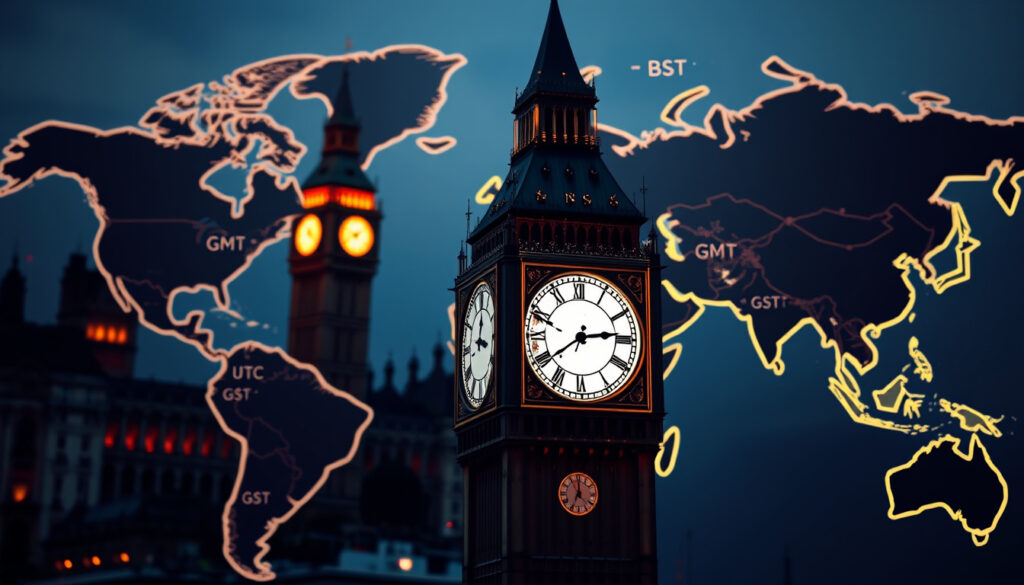
London Time Right Now: GMT, BST, and UTC Offset Explained
Anyone who’s ever landed in London and stared at a hotel clock knows the feeling: the city’s time seems simple until you try to explain it. London sits on Greenwich Mean Time (UTC+0) in winter and switches to British Summer Time (UTC+1) from late March to late October.
Current time in London: BST (UTC+1) in summer; GMT (UTC+0) in winter ·
UTC offset: UTC+1 from the last Sunday of March to the last Sunday of October; UTC+0 for the rest of the year ·
Daylight saving: Observed; clocks go forward 1 hour in spring, back 1 hour in autumn ·
Time zone name: British Summer Time (BST) in summer; Greenwich Mean Time (GMT) in winter
Quick snapshot
- London is on British Summer Time (BST), UTC+1, while daylight saving is active.
- London’s standard time has no UTC/GMT offset; daylight saving adds one hour.
- The UK clock-change schedule is set by the last Sundays of March and October.
- The exact gap between London and your city depends on your local zone’s UTC offset and whether your zone observes daylight saving.
- Whether specific online clocks update cleanly at the exact BST↔GMT transition hour.
- How much the technical difference between UTC and GMT matters for day-to-day scheduling.
- BST ends on 25 October 2026, when UK clocks fall back from 02:00 to 01:00.
- The 2026 switch from GMT to BST happened on 29 March at 01:00.
- The same rhythm repeats every year: late March to late October is BST, the rest is GMT.
- From 25 October 2026, London observes GMT (UTC+0) until the last Sunday of March 2027.
- If your zone doesn’t observe daylight saving, the gap between you and London shifts by one hour after that date. (25 October 2026)
- Re-check an official clock around each transition if a meeting is time-critical. (25 October 2026)
Seven rows, one pattern: London’s clock follows a two-season rhythm, and every conversion starts from the same UTC baseline.
| What | Value |
|---|---|
| Current time zone (6 October 2026) | BST (British Summer Time), UTC+1 — time.is (live syncing clock) |
| UTC offset — daylight saving | UTC+1 |
| UTC offset — standard time | UTC+0 (GMT) |
| Daylight saving | Observed; BST runs from late March to late October |
| 2026 spring transition | 29 March at 01:00 GMT — GOV.UK (official government guide) |
| 2026 autumn transition | 25 October at 02:00 BST, clocks back to 01:00 GMT — BBC (UK public broadcaster) |
| IANA time zone | Europe/London |
Is London 5 or 6 hours ahead?
It depends on where you’re comparing from. London’s clock only ever sits at two positions: UTC+0 in winter and UTC+1 in summer. The number you’re looking for is your own zone’s UTC offset, plus 0 or 1 depending on the season.
How the offset varies by your time zone
- If your city is UTC-5 in winter and UTC-4 in summer, London stays 5 hours ahead.
- If your city is UTC-6 in winter and UTC-5 in summer, London stays 6 hours ahead.
- If your city is on UTC+2, London is 2 hours behind in winter and 1 hour behind in summer.
This is why “5 or 6 hours” keeps showing up in search queries: it’s shorthand for two different US reference zones, not two different London times. London itself never moves between five and six — it moves between zero and one relative to UTC.
A meeting-planning tool that converts across zones puts it in GMT terms: it currently lists London as BST, or GMT+1 (World Time Buddy (meeting planner)). Same rule, different alphabet.
Daylight Saving and the shift from 5 to 6 hours
The UK’s two offsets are easy to memorise — +1 in summer, 0 in winter — but the arithmetic stops being simple when your home city also moves its clocks. If both zones shift on different weekends, there are transition windows where the gap is neither the winter number nor the summer number.
For 2026, the UK’s switch into BST happened on 29 March, and the switch back to GMT lands on 25 October, when clocks fall back from 02:00 to 01:00. Those dates follow the same rule every year: the last Sunday of March and the last Sunday of October.
The pattern: the offset confusion stems from the combination of two fixed UK states and the variable offsets of other zones, not from any ambiguity in London itself.
What time is it in the UK just now?
As of the reference date for this guide — 6 October 2026 — London is on BST, which means UTC+1. The live reading is one clock-check away, but knowing which zone the UK is in right now is the part most people miss.
How to check the current UK time
- The UK’s official time scale is UTC(NPL), maintained by the National Physical Laboratory, the national measurement institute.
- World Time Buddy (meeting planner) identifies London’s current zone as BST, GMT+1.
- For a refresher on when clocks change in other markets, our daylight-saving explainer covers the USA and Ireland dates.
The most reliable readings come from sources that synchronise to atomic time — the UK’s legal time scale is maintained by the National Physical Laboratory as UTC(NPL).
Whatever tool you use, get into the habit of checking the zone abbreviation, not just the digits. A page that says “15:30” without saying UTC+1 or BST is telling you half the story.
Understanding the difference between London and other UK cities
London doesn’t keep a separate clock from the rest of Britain — the whole country moves together between GMT and BST. The UK world clock page from Time and Date shows the entire country at the same UTC+1 offset during daylight saving (Time and Date (UK world clock)).
So “London time” and “UK time” are the same string of digits from Cornwall to the Highlands. No internal borders shift; the only change happens at the national boundary between BST and GMT.
The pattern: British time is one batch operation, not a patchwork. Memorise the two transition dates and you’ve memorised the UK clock for the year.
Is London on UTC time now?
Twice a year the answer flips. During BST, London runs one hour ahead of UTC; during GMT, the two clocks show the same reading.
When London matches UTC exactly
- London matches UTC exactly during standard time — the months between the last Sundays of October and March, when the UK is on GMT.
- GMT carries a UTC offset of zero — Time and Date (time-zone reference) — which is why the two readings look identical.
- During those months, “London time” and “UTC” can be swapped on a meeting invite without changing the hour.
When London is ahead of UTC
During BST, London is exactly one hour ahead of UTC. That one hour is the engine behind the GMT/BST confusion: the same city, two offsets, and a search index full of pages that forget which half of the year it is.
- During BST, London is UTC+1 — the offset time.is (live syncing clock) showed for London on the reference date of this guide.
- In spring 2026, the UK moved to BST at 01:00 GMT; in autumn it moves back on 25 October at 02:00, falling to 01:00 GMT.
- The calendar rule never changes: the last Sunday of March opens BST, the last Sunday of October closes it.
That “last Sunday” rule is the only date you need to store. Everything else — the abbreviation, the offset, the confusion — follows from it.
What this means: “Is London on UTC?” is a two-season question. For half the year the answer is “exactly”; for the other half it’s “one hour ahead” — and the switch date is the only detail that matters.
What’s confirmed, and what’s not
Confirmed facts
- London switches between GMT and BST twice a year, on the last Sundays of March and October.
- The UK’s clocks go forward at 01:00 and back at 02:00.
- During BST, London is UTC+1; during GMT, it is UTC+0.
What’s unclear
- The exact offset from your location depends on your local time zone and its daylight-saving rules.
- Whether specific online clocks update cleanly at the exact transition hour.
- How much the technical difference between UTC and GMT matters for everyday scheduling.
The balance here leans uncertain by design: the UK’s rules are published and fixed, but the software that converts time on your screen is only as good as its last update.
What the sources say
When the clocks go forward, the period one hour ahead is called British Summer Time (BST).
— GOV.UK, official UK government guidance
The UK changed to BST at 01:00 GMT in spring 2026. BST will end on 25 October 2026 when clocks in the UK fall back from 02:00 to 01:00.
— BBC, UK public broadcaster
The National Physical Laboratory maintains the UK’s official time scale, UTC(NPL).
— National Physical Laboratory, the UK’s national measurement institute
What this means: the official and broadcast sources agree on the same two dates and the same +1 offset — the disagreement you find in search results comes from freshness, not from the rules.
On the morning of 26 October 2026, London’s clocks will have fallen back and the city will rejoin GMT — a one-hour shift that ripples through every international meeting, train timetable, and live call with the UK. For anyone who schedules work across time zones, the rule is simple: check whether London is on BST or GMT before you lock the meeting, or accept that someone will be waiting an hour in an empty room.
Related reading
- When Does Daylight Savings Start 2025? USA & Ireland Dates
- When Does Spring Start in NZ? 2026 Dates & Seasons
timeanddate.com, timeanddate.com, timeanddate.com, timeanddate.com, timeanddate.com
Frequently asked questions
Is London 1 hour ahead of UTC?
During British Summer Time, yes — London is UTC+1 from the last Sunday of March to the last Sunday of October. During GMT, no — London is UTC+0. “One hour ahead” is a summer statement, not a permanent one.
What time is it now in GMT?
GMT is UTC+0 and does not observe daylight saving. London is on GMT from late October to late March; between late March and late October, London runs GMT+1 (BST), so there is no “live” GMT reading in London during summer.
Is GMT the same as Irish time now?
In winter, yes — Ireland observes GMT during the standard-time months. In summer, Ireland is one hour ahead on Irish Standard Time (UTC+1), following the same clock-change pattern as the UK. See our breakdown of daylight-saving dates for the USA and Ireland.
Is UK GMT or GMT+1 now?
As of the reference date for this guide — 6 October 2026 — the UK is on GMT+1, known as British Summer Time. After 25 October 2026, the UK returns to GMT (GMT+0), according to the BBC (UK public broadcaster).
How do I convert UTC to my local time?
Take your local zone’s UTC offset and add 0 during GMT or 1 during BST. If your city is on UTC+2, London is 2 hours behind in winter and 1 hour behind in summer. If your city is UTC-5 in winter and UTC-4 in summer, London stays 5 hours ahead.
If your question isn’t here, the two dates above — the last Sunday of March and the last Sunday of October — answer most of what’s left.
More related posts
 8 Out of 10 Cats: Cast, Why It Ended, and Sean Lock’s Death
 The Wonderfully Weird World of Gumball – All You Need to Know
 The Last Secret Agent: Pippa Latour’s True WWII Spy Story
 4 Bedroom House for Rent Auckland – 2025 Prices, Suburbs & Tips
 Invasive Spider NZ Hotspots: Noble False Widow Spread
 Ministry of Health NZ: Role, Contact, Records & Key Issues
 Bonnie Blue 1000 People Video: Documentary & Controversy
 How many days until Christmas 2025? Countdown details
