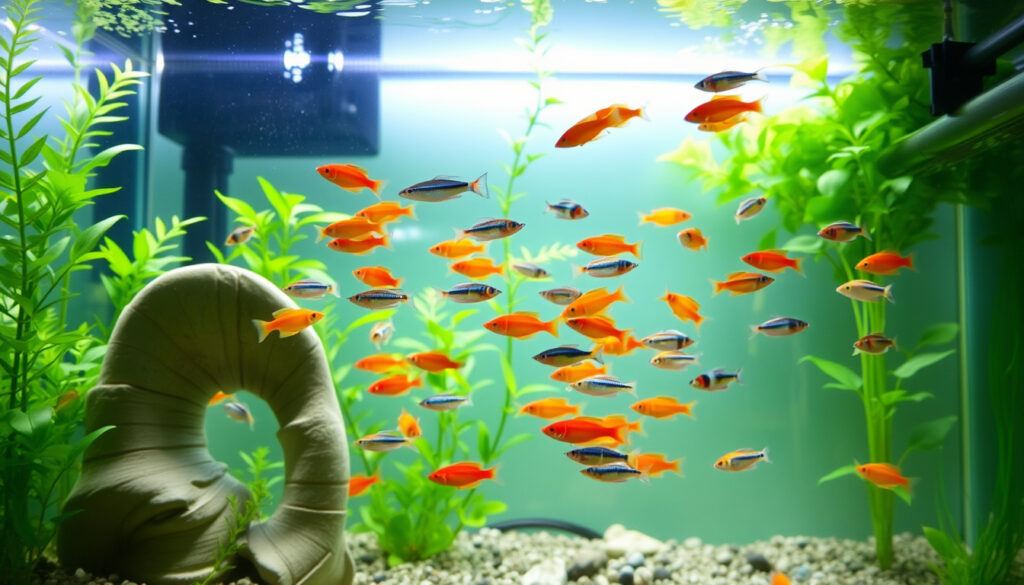
Best Aquarium Fish for Beginners: Top Picks & Expert Advice
Few things spark as much anticipation as setting up your first aquarium. That glass box represents a small world you’re about to bring to life — but the fastest way to lose that excitement is losing fish within the first week. The good news: choosing the right species from the start dramatically changes the odds. The fish that thrive in beginner setups, the tank mates that get along, and the three mistakes that cause most early losses — these are the details that separate a thriving tank from a cloudy one.
Recommended tank size for beginners: 10 gallons (minimum) ·
Number of fish to start with: 3 to 5 small fish ·
Average time to cycle a new tank: 4 to 6 weeks ·
Lifespan of common beginner fish: 2 to 5 years
Quick snapshot
- Fish need a cycled tank with zero ammonia and nitrite (Aquifarm (beginner fish guide))
- Overfeeding is a leading cause of water quality issues (Fishkeeping World (aquarium advice))
- Weekly 20–30% water changes maintain stable conditions (Gensou (aquarium care))
- Whether fish feel love toward owners – no consensus; they show conditioned responses
- Exact minimum tank sizes for some species vary by expert opinion
- Whether bettas can be left alone for several days – depends on feeder reliability and fish health
- Fishless cycling: 4–6 weeks with ammonia source (Gensou (aquarium care))
- Add fish gradually over several weeks after cycle completes (Aquifarm (beginner fish guide))
- Choose a 10- or 20-gallon tank to start
- Cycle the tank completely before adding any fish
- Start with hardy species like White Cloud minnows or zebra danios
Here is a quick summary of key facts for beginners.
| Label | Value |
|---|---|
| Smallest beginner tank | 5 gallons |
| Hardiest beginner fish | White Cloud Mountain minnow |
| Most common beginner mistake | Overfeeding |
| Time to cycle a tank | 4–6 weeks |
| Recommended starting tank | 10–20 gallons |
| Water change frequency | 20–30% weekly |
| Number of fish to start | 3–5 small fish |
| Beginner fish lifespan | 2–5 years |
What are the best fish for a beginner tank?
Best fish for small tanks (5–10 gallons)
- Betta fish — hardy, colorful, and suited to a 5-gallon minimum with a heater. Best kept solo (Aquarium Store Depot (aquarium retailer)).
- White Cloud Mountain minnows — tolerate cooler temperatures, very hardy, and active in a small school (Gensou (aquarium care)).
- Neon tetras — peaceful and small, but need a school of 6+ and a cycled tank before introduction (Aquarium Store Depot (aquarium retailer)).
Small tanks (5 gallons) fluctuate in temperature and chemistry faster than larger setups. A beginner with a 5-gallon tank faces tighter margins for error than one with a 10- or 20-gallon tank (Aquifarm (beginner fish guide)).
Best fish for 20-gallon tanks and larger
- Corydoras catfish — social bottom-dwellers that should be kept in groups of 3 or more. They need sand or smooth gravel (Aquarium Store Depot (aquarium retailer)).
- Harlequin rasboras — require a school of 8 or more; they are peaceful and visually striking (Aquarium Store Depot (aquarium retailer)).
- Platies — hardy livebearers that adapt well to community tanks and breed readily (Aquifarm (beginner fish guide)).
Top 5 beginner fish species
Five species consistently appear across expert recommendations for first-time fishkeepers. Each has a specific strength that suits a different beginner scenario.
- Neon Tetra — peaceful, small, schooling (6+). Best for a cycled 10-gallon tank.
- Corydoras Catfish — bottom dweller, social (3+), needs smooth substrate.
- Betta Fish — hardy, colorful, needs a heater. Solo tank recommended.
- Platy — easy livebearer, community-friendly, adapts to varied water.
- Zebra Danio — active, resilient, and can jump without a lid (Aquarium Store Depot (aquarium retailer)).
The pattern: the most forgiving species share two traits — they tolerate fluctuations in water parameters and they don’t require rigid feeding schedules. For a beginner, these two traits matter more than color or rarity.
The takeaway: For a beginner tank, choose hardy species like White Cloud minnows or zebra danios, and start with a 10- to 20-gallon tank for stability. Patience with cycling is non-negotiable.
What fish can go together in a tank for beginners?
Peaceful community fish combinations
- Neon tetras + corydoras catfish + harlequin rasboras — all peaceful, all stay small, all prefer similar water parameters (Aquarium Store Depot (aquarium retailer)).
- Platies + zebra danios + White Cloud minnows — hardy mix that tolerates slightly cooler water.
- Endler’s livebearers + cherry shrimp — a small-tank option, but population management is needed if mixed sexes are kept (Aquarium Store Depot (aquarium retailer)).
Fish to avoid in a community tank
- Tiger barbs — known fin-nippers; they stress slower, long-finned tank mates.
- Black skirt tetras — present a fin-nipping risk with long-finned fish like bettas or angelfish (Aquarium Store Depot (aquarium retailer)).
- Large cichlids — aggressive and territorial; not suitable for a peaceful community tank.
- Common goldfish — produce heavy waste and need 20+ gallons; they also prefer cooler water than tropical fish (Aquifarm (beginner fish guide)).
Which fish enjoy living alone?
Some fish are naturally solitary. Male bettas are the classic example: they should never be housed with other male bettas, and even tank mates must be chosen with care (Aquarium Store Depot (aquarium retailer)). Honey gouramis also prefer solitude but need access to the water surface for labyrinth breathing (Aquarium Store Depot (aquarium retailer)).
The catch: solitary fish are not lower maintenance — they still need the same water quality, heater, and feeding schedule. The only difference is they don’t require school-mates.
What is the easiest low maintenance fish?
White Cloud Mountain minnows
Widely considered the hardiest beginner fish, White Cloud Mountain minnows tolerate temperatures as low as 60°F and don’t need a heater in most room-temperature homes. They are active, school in groups of 5+, and rarely fall ill (Gensou (aquarium care)).
Common goldfish
Goldfish are often marketed as low-maintenance, but the reality is different. They produce large amounts of waste and require a tank of 20 gallons or more with strong filtration. Keeping a goldfish in a bowl is one of the most common beginner mistakes that leads to early death (Aquifarm (beginner fish guide)).
Zebra danios
Zebra danios are active, resilient, and among the easiest fish to care for. They adapt to a wide range of water conditions and are forgiving of minor fluctuations. One caution: they can jump, so a lid is essential (Aquarium Store Depot (aquarium retailer)).
For a beginner who wants the lowest possible maintenance, the White Cloud Mountain minnow wins — no heater needed, no special diet, and a high tolerance for less-than-perfect water. The trade-off is that they are not as colorful as tropical species.
The implication: choosing the right low-maintenance fish removes the biggest obstacles for new keepers — temperature control and feeding precision.
What mistakes do beginner fish owners make?
Overfeeding
Overfeeding is repeatedly identified as the top mistake in fishkeeping advice pieces. Uneaten food decays and produces ammonia, which spikes water toxicity and kills fish. The rule: feed only what the fish can consume in 2 minutes, once daily (Fishkeeping World (aquarium advice)).
Skipping the nitrogen cycle
Adding fish before the tank has cycled is the leading cause of New Tank Syndrome. A cycled tank has beneficial bacteria that convert ammonia to nitrite and then to nitrate — without this cycle, fish die from ammonia poisoning. The process takes 4–6 weeks (Aquifarm (beginner aquarium mistakes)).
Adding too many fish at once
Stocking too quickly overloads the biological filter. Even in a cycled tank, the bacterial colony needs time to adjust to the bioload of new fish. Gradual stocking — adding 2–3 fish every 2 weeks — is the recommended approach (Aquifarm (beginner fish guide)).
What not to put in a fish tank?
- Ornaments with sharp edges — they can tear fish fins.
- Certain plastics — some leach chemicals into the water.
- Incompatible species — mixing aggressive fish with peaceful ones causes stress and death (Fishkeeping Forever (fishkeeping advice)).
- Unsealed driftwood or rocks — they can alter water chemistry unpredictably.
The implication: almost every beginner mistake traces back to impatience — feeding too much, adding fish too soon, stocking too many at once. The single most effective change a new fishkeeper can make is to slow down.
Do I have to wait 24 hours to put fish in the tank?
Understanding the nitrogen cycle
A 24-hour wait does not cycle a tank. True cycling takes 4–6 weeks, during which beneficial bacteria colonies establish to convert toxic ammonia into nitrite and then into nitrate. Without completion of this cycle, fish die from ammonia poisoning (Gensou (aquarium care)).
How to cycle a tank without fish
Fishless cycling is the humane and reliable method. Add a source of ammonia (pure ammonia or fish food) to the tank, test the water weekly, and wait until the tank processes 2–4 ppm of ammonia to zero ammonia and zero nitrite within 24 hours. This typically takes 4–6 weeks (Gensou (aquarium care)).
How to cycle a tank with fish (fish-in cycling)
Fish-in cycling is riskier and requires daily water changes and constant monitoring of ammonia and nitrite using a liquid test kit. It is only recommended for experienced keepers or emergency situations. For beginners, fishless cycling is strongly preferred (Aquifarm (beginner fish guide)).
A beginner who waits 24 hours and adds fish will almost certainly lose them within the first week. A beginner who waits 4–6 weeks and cycles the tank properly will have a thriving aquarium for years. The difference is entirely about patience.
The pattern: patience upfront determines everything. The 24-hour myth is the most harmful piece of advice a new fishkeeper can follow.
Beginner fish comparison
Five popular beginner species, one clear pattern: the hardiest fish share a tolerance for temperature and water fluctuations, while the more sensitive species require stable, cycled conditions.
| Species | Minimum tank | Temperature range | Temperament | Schooling |
|---|---|---|---|---|
| Neon Tetra | 10 gallons | 72–78°F | Peaceful | School of 6+ |
| Corydoras Catfish | 10 gallons | 72–78°F | Peaceful | Group of 3+ |
| Betta Fish | 5 gallons | 76–82°F | Semi-aggressive | Solo |
| Platy | 10 gallons | 70–78°F | Peaceful | Group of 3+ |
| White Cloud Minnow | 10 gallons | 60–72°F | Peaceful | School of 5+ |
| Zebra Danio | 10 gallons | 64–78°F | Active, peaceful | School of 5+ |
The trade-off: species that tolerate cooler water (White Cloud minnows, zebra danios) often don’t need a heater, which lowers upfront cost. But they also tend to be less colorful than tropical species like neon tetras or bettas.
Steps to set up your first beginner tank
- Choose the tank — start with a 10- or 20-gallon tank. Smaller tanks are harder to maintain (Aquifarm (beginner fish guide)).
- Set up equipment — install filter, heater (for tropical fish), thermometer, and lid. Use a timer for lighting to create a consistent day-night cycle (Aquarium Freaks (aquarium advice)).
- Cycle the tank — add an ammonia source and wait 4–6 weeks. Test regularly for ammonia, nitrite, and nitrate using a liquid test kit (Gensou (aquarium care)).
- Add fish gradually — after the cycle is complete, add 2–3 fish at a time, waiting 2 weeks between additions. This prevents overloading the biological filter (Aquifarm (beginner fish guide)).
- Maintain weekly — change 20–30% of the water weekly, test parameters, and clean the filter media in tank water (not tap water) to preserve beneficial bacteria (Aquariadise (aquarium care)).
The most “low maintenance” fish require the most patience upfront. The 4–6 week cycling period is the single biggest barrier for beginners — and the single biggest predictor of success.
The catch: every shortcut you take in setup creates a problem later. Following the steps in order is the only reliable path to a stable tank.
What’s confirmed and what’s still unclear
Confirmed facts
- Fish need a cycled tank with zero ammonia and nitrite before introduction (Aquifarm (beginner fish guide)).
- Overfeeding is a leading cause of water quality issues and fish death (Fishkeeping World (aquarium advice)).
- Weekly 20–30% water changes maintain stable water conditions (Gensou (aquarium care)).
- Fishless cycling is the humane and reliable method for establishing the nitrogen cycle (Gensou (aquarium care)).
What’s still unclear
- Whether fish feel love toward owners — no scientific consensus; they show conditioned responses to feeding and presence.
- Exact minimum tank sizes for some species vary by expert opinion; some sources recommend 20 gallons for species others say 10 gallons.
- Whether fish-in cycling can ever be considered safe for beginners — most experts say no, but some guides present it as an option.
- Whether bettas can be left alone for several days — depends on feeder reliability and fish health.
What the experts say
“Rasboras, tetras, and corydoras are the top beginner fish because they are peaceful, hardy, and adapt well to community tanks.”
— Aquarium Coop team, aquarium retailer and educator
“White Cloud minnows are among the easiest fish to care for. They tolerate cooler temperatures and don’t need a heater, making them ideal for beginners on a budget.”
— The Spruce Pets, pet care resource
“The most common mistake new fishkeepers make is adding fish before the tank is cycled. Patience is the single most important tool in the hobby.”
— Aquifarm, beginner fishkeeping guide
For a beginner in New Zealand, the choice is clear: invest 4–6 weeks in cycling a 10- or 20-gallon tank, start with a hardy species like White Cloud minnows or zebra danios, and resist the urge to overfeed or overstock. The first month is the hardest — after that, a well-set-up aquarium runs itself with minimal intervention.
aquifarm.com, aquanswers.com, aquariumenthusiasts.com, creators.yahoo.com, efishkeeping.com, buildyouraquarium.com
Frequently asked questions
What is the best fish for a 5-gallon tank?
A single betta fish is the best choice for a 5-gallon tank. They are hardy, colorful, and thrive in a heated, filtered 5-gallon setup. Avoid adding tank mates in a tank this small (Aquarium Store Depot (aquarium retailer)).
How many fish can I put in a 10-gallon tank?
In a 10-gallon tank, start with 3–5 small fish. A good combination is a school of 6 neon tetras or a group of 5 White Cloud minnows. Overstocking is a common beginner mistake (Aquifarm (beginner fish guide)).
Do I need a heater for a beginner fish tank?
It depends on the fish. Tropical fish like bettas and neon tetras need a heater to maintain 72–82°F. Coldwater fish like White Cloud minnows and zebra danios can live without a heater in most room-temperature homes (Gensou (aquarium care)).
How often should I clean a fish tank?
Perform a 20–30% water change once a week. Clean the glass and gravel as needed, but avoid over-cleaning the filter — rinse it in tank water (not tap water) to preserve beneficial bacteria (Aquariadise (aquarium care)).
Can I keep goldfish with tropical fish?
No. Goldfish prefer cooler water (60–72°F) while tropical fish need warmer water (72–82°F). Mixing them stresses both types. Goldfish also produce more waste, which can overwhelm the filter (Aquifarm (beginner fish guide)).
What temperature should my aquarium be?
For tropical fish, maintain 74–80°F. For coldwater fish like White Cloud minnows, 60–72°F is ideal. Use a reliable aquarium thermometer and a heater with a thermostat for tropical setups (Aquarium Store Depot (aquarium retailer)).
How long can a fish go without food?
Most healthy adult fish can go 2–3 days without food. Bettas and some other species can go up to a week if well-fed beforehand. For longer absences, use an automatic feeder or a slow-release food block (Fishkeeping World (aquarium advice)).
More related posts
 Sarah Maas Book Order: Throne of Glass, ACOTAR, Crescent City
 Ninja Swirl Creami NZ: Price, Differences & Verdict
 Farmer Wants a Wife 2026: Couples Update & Marriages
 Where to Watch Tina Movie NZ on Netflix, Prime, Angel
 Regent Seven Seas Cruises – Reviews, Prices, Itineraries
 Now You See Me: Now You Don’t – Release Date, Cast & Streaming
 Best Currency Exchange Near Me in Dublin & Galway – Fees Compared
 Who Invented the Telephone? Bell, Meucci and the True Story
