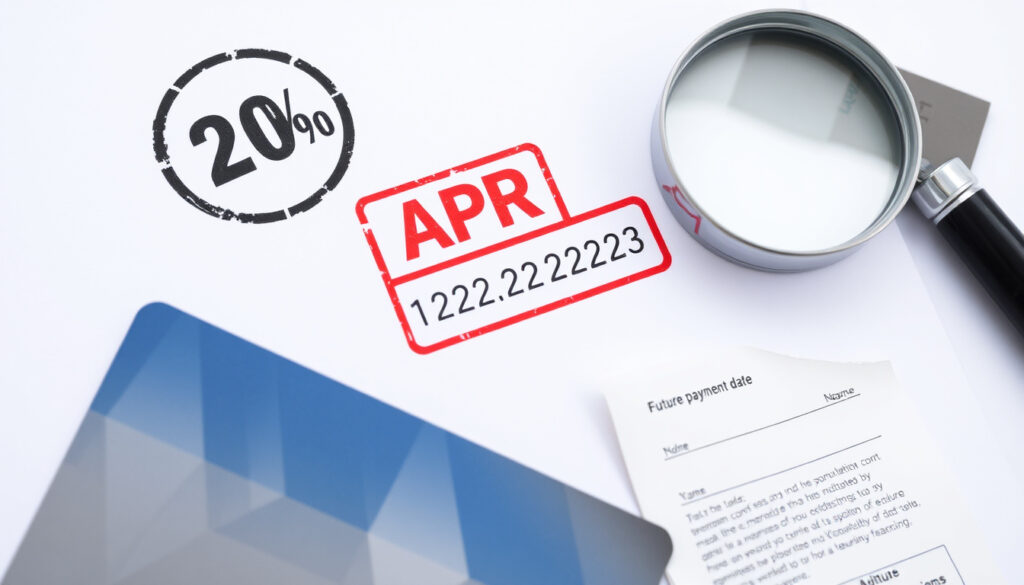
Q Card Interest Free: How Long, Benefits, and Downsides
Anyone who’s ever faced an unexpected expense knows the relief of having a few months to pay it off without interest piling on. That’s the basic promise of Q Card’s interest-free offer — a three-month window where standard purchases carry no interest charges and no required payments. But as with any finance card, the real story lies in what happens after the promotional period ends and how the terms stack up against other options in New Zealand.
Interest-free period: 3 months ·
Minimum spend: None ·
Standard rate: 28.95% p.a. ·
Annual fee: $50 ·
Eligible purchases: Standard purchases (excludes Long Term Finance & cash advances)
Quick snapshot
- 3 months on standard purchases (Q Cards, the official NZ provider)
- No minimum spend required (Q Cards, the official NZ provider)
- No payments due during the period (Q Cards, the official NZ provider)
- Available to New Zealand residents (MoneyHub, the NZ finance comparison site)
- May accept less-than-perfect credit (MoneyHub, the NZ finance comparison site)
- Application online or in-store (MoneyHub, the NZ finance comparison site)
- Standard rate of 28.95% p.a. (MoneyHub, the NZ finance comparison site)
- $50 annual account fee (MoneyHub, the NZ finance comparison site)
- Late payment fees apply (MoneyHub, the NZ finance comparison site)
- Other 0% intro APR cards with longer periods (MoneyHub interest-free credit cards guide)
- Store cards with promotional offers (MoneyHub interest-free credit cards guide)
- Low-interest personal loans (MoneyHub interest-free credit cards guide)
| Provider | Q Cards (New Zealand) |
|---|---|
| Interest-free duration | 3 months |
| Interest-free applies to | Standard purchases |
| Minimum purchase | None |
| Standard rate | 28.95% p.a. |
| Annual fee | $50 (two $25 instalments) |
| Card network | Q Card or Q Mastercard |
| Foreign transaction fee | Check card agreement |
How long is Q Card interest free?
Q Card and Q Mastercard offer a standard 3-month interest-free period on all standard purchases. That means for three months from the date of each purchase, you pay no interest and no minimum payments are required. According to Q Cards, the official New Zealand card provider, this applies automatically to every standard purchase with no minimum spend and no application needed for each transaction.
Long Term Finance deals and cash advances are explicitly excluded from this 3-month interest-free offer. Only standard purchases qualify automatically.
MoneyHub, the New Zealand personal finance comparison site, describes this as a “payment holiday” that can help with cash flow but warns that the real cost arrives once the period ends. MoneyHub’s review notes that the standard Q Card interest rate of 28.95% p.a. applies to any balance left unpaid after the 3 months.
Is Q Mastercard interest free for 3 months?
- Yes — the Q Mastercard carries the same 3-month interest-free feature on standard purchases as the standard Q Card, per Q Cards official benefits page.
- There is no difference in the interest-free period between the two card variants.
- The Q Mastercard is accepted at any merchant that displays the Mastercard logo, making it more widely usable than a store-specific card.
What cards offer 0% interest?
A 0% interest credit card lets you borrow without paying interest for a set introductory period — typically 12 to 18 months in most markets. These cards require good to excellent credit and often include balance transfer fees of 3–5%. Q Card’s 3-month interest-free offer is shorter and structured differently from the standard 0% intro APR model, but it serves a similar purpose for short-term cash flow needs.
Can I get a 0% interest credit card?
- Many major credit card issuers in New Zealand offer 0% introductory APR for periods ranging from 6 to 18 months on purchases, balance transfers, or both.
- Eligibility typically requires a good credit score, whereas MoneyHub notes that Q Card may be available to applicants with less-than-perfect credit histories.
- 0% cards often come with higher standard APRs after the intro period ends, similar to Q Card’s 28.95% p.a. rate.
What is a 0% Intro APR Credit Card?
- A 0% intro APR credit card charges no interest on purchases, balance transfers, or both for a fixed promotional period — commonly 12, 15, or 18 months.
- After the intro period, the standard variable APR applies, which can be above 20% depending on the issuer and your credit profile.
- According to Consumer NZ, the independent consumer advocacy group, interest-free finance deals in New Zealand often include setup and annual fees that add to the true cost.
How does 12 months interest free work?
A 12-month interest-free period means you pay no interest on purchases for a full year, provided you pay the balance in full before the end of the promotional window. If the balance is not cleared, interest typically accrues from the original purchase date — not from the end of the promo period. Q Card does not offer a standard 12-month interest-free term on its own, but it does provide access to long-term finance deals at participating retailers that can extend to 12, 24, or even 50 months.
What is the difference between 3 months and 12 months interest free?
- With 3 months interest free, you have a much shorter window to repay without incurring charges. This works well for small, one-off purchases or short-term cash flow needs.
- With 12 months interest free, you can spread larger expenses — like electronics or furniture — across a full year without interest, but you usually need good credit and must meet minimum purchase thresholds.
- MoneyHub’s interest-free credit cards guide warns that long-term finance offers can feel like “free money” but create a debt bomb if you miss the final payment deadline.
- Q Card’s standard 3-month offer requires no setup fee per transaction, while its long-term finance deals at retailers charge a $55 establishment fee on the first transaction and a $35 advance fee on subsequent ones, according to Q Cards fee schedule.
What are the downsides of 0% interest cards?
Zero percent interest sounds like a perfect deal, but these cards carry real risks that can cost you more than a standard credit card if you aren’t careful. The biggest downside: after the promotional period ends, the interest rate can spike to levels well above what a regular card charges. For Q Card, that means jumping from 0% to 28.95% p.a. on any balance you haven’t cleared.
A missed payment doesn’t just trigger late fees of $10–$15 — it can cause you to lose the promotional rate entirely, and the full balance starts accruing interest from the purchase date. Consumer NZ found that post-promotional rates on finance cards range from 19.75% to 29.49% p.a., making them some of the most expensive credit products available.
What is the biggest killer of credit scores?
- Payment history is the single largest factor in credit scoring models, accounting for roughly 35% of your score. One late payment on a 0% card can drop your score by 60–100 points, according to Consumer NZ’s research on credit behaviour.
- Credit utilisation is the second biggest factor (about 30%). Maxing out a 0% card with a large purchase pushes your utilisation ratio high, which signals risk to lenders and depresses your score.
- For Q Card users, the 3-month window means you need to either pay off the full purchase by month three or face both interest charges and potential credit score damage if you carry a high balance.
Is a Q Card worth it?
Q Card can be a useful tool for short-term cash flow management — particularly if you need to delay payment on a purchase by three months without paying interest. But whether it’s worth it depends entirely on how you use it and what alternatives you qualify for.
What are the benefits of Q Card?
- 3 months interest free and payment-free on every standard purchase, with no minimum spend (Q Cards interest-free terms).
- Access to long-term finance deals at thousands of participating New Zealand retailers, with interest-free terms ranging from 12 to 50 months at stores like Farmers, PB Tech, and Michael Hill (MoneyHub review).
- Q Mastercard is accepted globally wherever Mastercard is accepted, giving it broader utility than a store-only card.
- May be easier to qualify for than traditional 0% credit cards if your credit history is less than perfect (MoneyHub eligibility note).
What are the fees on a Q Card?
- Annual account fee: $50, charged in two $25 instalments every six months (Q Cards fee page).
- Long-term finance establishment fee: $55 on the first transaction (Q Cards fee schedule).
- Long-term finance advance fee: $35 on each subsequent transaction.
- Late payment fees: Typically $10–$15 per missed payment, according to Consumer NZ research.
- Foreign transaction fees: Apply when using the card overseas — check your card agreement for the exact rate.
What is the biggest killer of credit scores?
The single most damaging thing you can do to your credit score is miss a payment. Payment history makes up more than a third of most credit scoring models, and a single late payment can stay on your file for up to five years in New Zealand. For Q Card users, the risk is especially high because the 3-month interest-free period creates a false sense of freedom — no payments are due, so it’s easy to forget that a payment will eventually be required.
How does missing a payment on a 0% card affect your score?
- Immediate score drop: A payment that is 30 days or more late can reduce your credit score by 60–100 points depending on your starting score (Consumer NZ data on credit impacts).
- Promotional rate loss: Missing a payment on many 0% cards triggers a penalty APR that applies retroactively to the entire balance — not just future purchases.
- High utilisation risk: Because Q Card encourages spending within the 3-month window without payments, users may run up balances that push utilisation above 30%, the threshold where scores start to drop.
- Collection risk: If the balance goes unpaid for several months, the account may be sent to collections, which does severe damage to your score for years (MoneyHub debt warning).
Q Card vs. Other 0% Credit Cards: A Comparison
Four key dimensions, one clear pattern: Q Card offers the shortest promotional window but the lowest barrier to entry, making it a trade-off between accessibility and long-term cost.
| Feature | Q Card / Q Mastercard | Typical 0% Intro APR Card (NZ) |
|---|---|---|
| Interest-free period | 3 months (standard purchases) | 12–18 months (introductory) |
| Minimum spend requirement | None | Often none for purchases; may apply for balance transfers |
| Standard rate after promo | 28.95% p.a. | Typically 19.75% – 29.49% p.a. (Consumer NZ data) |
| Annual fee | $50 (charged as two $25 instalments) | Often $0 for first year; $30–$60 thereafter |
| Credit score requirement | Less stringent — may accept average credit | Good to excellent typically required |
| Long-term retail finance options | Up to 50 months at partner retailers | Not available — standard revolving credit only |
| Setup fees per transaction | None for standard purchases; $55 first / $35 subsequent for long-term finance | None for purchases; 3–5% for balance transfers |
| Late payment fee | $10–$15 per occurrence (Consumer NZ research) | Up to $30–$50 depending on issuer |
The implication: Q Card trades a shorter interest-free window for wider accessibility and no minimum spend. It makes sense for small, short-term purchases when your credit profile limits other options, but the 28.95% p.a. rate means carrying a balance past month three is significantly more expensive than most mainstream 0% cards.
Q Card Specifications at a Glance
Eight specifications that define what Q Card actually costs and where it works — drawn from the official terms and independent reviews.
| Specification | Detail |
|---|---|
| Card type | Q Card (store card model) / Q Mastercard (network card) |
| Network acceptance | Mastercard (Q Mastercard only) — accepted wherever Mastercard is accepted (Q Cards) |
| Interest-free period (standard) | 3 months on all standard purchases |
| Interest rate (standard) | 28.95% p.a. — charged daily on unpaid balances after the 3-month window (MoneyHub) |
| Annual account fee | $50 (two $25 instalments every six months) |
| Long-term finance establishment fee | $55 on first transaction; $35 on subsequent transactions |
| Minimum repayment (long-term finance) | 3% of monthly closing balance or $10, whichever is greater (YOU Travel, a NZ travel agency partner) |
| Interest calculation | Daily interest on unpaid balances after the interest-free period ends |
The pattern: Q Card’s feature set sits between a store card and a full credit card. It offers the convenience of a network card (Mastercard) with the promotional structure of a retail finance product — including setup fees that standard credit cards don’t charge.
Pros and Cons of Q Card
Upsides
- 3 months interest free on all standard purchases with no minimum spend
- No payments required during the 3-month period — helps with cash flow
- Access to long-term finance deals up to 50 months at major NZ retailers
- Q Mastercard is accepted globally wherever Mastercard is accepted
- May be available to applicants with less-than-perfect credit histories
- No setup fee for standard purchases — only for long-term finance deals
Downsides
- Standard interest rate of 28.95% p.a. is higher than many mainstream credit cards
- $50 annual fee applies even if you don’t use the card
- Long-term finance charges $55 establishment fee on the first transaction
- Only 3 months interest free — much shorter than typical 0% intro APR cards
- Interest-free offer excludes Long Term Finance and cash advances
- Late payment fees and potential credit score damage if you miss the 3-month deadline
What We Know and What’s Unclear
Confirmed facts
- 3 months interest free on all standard purchases with no minimum spend (Q Cards official terms)
- No payments required for the 3-month period
- Long Term Finance and cash advances are excluded from the interest-free offer
- Standard interest rate after the promotional period is 28.95% p.a. (MoneyHub confirmed rate)
- $50 annual account fee, charged as two $25 instalments
- $55 establishment fee on first long-term finance transaction (Q Cards fee schedule)
What’s unclear
- Exact foreign transaction fee percentages — not publicly listed on the official site
- Whether Q Card reports to all major credit bureaus in New Zealand (likely yes, but not confirmed)
- Specific approval criteria and minimum income requirements
- Full terms and conditions for all long-term finance partner deals
What Users and Experts Say
“You get 3 months interest free on everything so if I need to delay the payment to keep other balances in the green it’s not an issue.”
— Reddit user on the PersonalFinanceNZ subreddit, discussing Q Card’s no-interest feature
“Everything you buy is entitled to three months interest free, with no repayments. This is the standard offering from Q Card.”
— MoneyHub NZ, the independent personal finance comparison site
“Interest-free finance deals are seldom fee-free. They usually include a setup fee and a yearly service fee, and missed repayments can trigger late payment fees of about $10 to $15.”
— Consumer NZ, the independent consumer advocacy group
For New Zealanders who need a short-term, no-interest payment buffer and may not qualify for traditional 0% credit cards, Q Card offers a genuinely useful tool — three months of breathing room on any purchase, no minimum spend, and no payments due. But the 28.95% p.a. rate that kicks in after month three, combined with a $50 annual fee and setup costs on long-term finance, means this card rewards disciplined users and punishes the forgetful. For the average Kiwi shopper deciding between Q Card and a mainstream 0% card, the choice is clear: use Q Card for short-term timing on small purchases, or pursue a longer 0% intro APR card if you need real financing time and have the credit score to qualify.
Frequently asked questions
Does Q Card offer 0% interest on cash advances?
No. Cash advances are explicitly excluded from Q Card’s interest-free offer. Interest applies from the transaction date, and fees may also apply.
Can I get a Q Card with bad credit?
Q Card may be more accessible than traditional credit cards for applicants with less-than-perfect credit histories, according to MoneyHub’s review. Approval is not guaranteed, but the card targets a broader credit range than most major bank cards.
How do I make payments on my Q Card?
Payments can be made online through the Q Mastercard app, via automatic direct debit, in-store at participating retailers, or by bank transfer. The minimum payment on standard purchases after the 3-month period is 3% of the balance or $10, whichever is greater.
What is the Q Mastercard app used for?
The Q Mastercard app lets you check your balance, view transactions, make payments, and manage your account. It’s available for iOS and Android and provides a quick way to track your 3-month interest-free window on each purchase.
How do I contact Q Mastercard support?
Customer support can be reached via the contact details on the official Q Cards website. Hours and contact methods are listed in the cardholder agreement and on the Q Mastercard app.
Can I transfer a balance to Q Card?
Q Card does not prominently advertise balance transfer features. Its primary function is a purchase-based interest-free card rather than a balance transfer card. Check the official terms for any balance transfer options.
What happens if I miss the 3-month payment deadline?
After the 3-month interest-free period ends, the standard rate of 28.95% p.a. applies to any unpaid balance, and interest is charged daily. Late payment fees of $10–$15 may also apply per Consumer NZ data. Missing payments can also damage your credit score.
Is Q Card available to non-New Zealand residents?
Q Card is designed for New Zealand residents. Non-residents would need to meet specific eligibility criteria, which may include holding a valid NZ address and bank account. Check the official application page for the latest requirements.
More related posts
 Lilo and Stitch Live Action: 2025 Cast, Release, Representation
 Best Currency Exchange Near Me in Dublin & Galway – Fees Compared
 Chelsea F.C. vs Arsenal F.C.: Head-to-Head, Stats, and Pride
 New Balance Sale Shoes Ireland: Best Deals 2025
 Man City vs Newcastle – Kick-Off Lineups Prediction Odds
 Chiefs vs Moana Pasifika: Time, Stream & Prediction Guide
 Away in a Manger Lyrics: Full Text, History, and Author
 Tom Phillips NZ: Why Did He Leave and What Happened
