Can You Freeze Cooked Chicken? Tips & Safety Guide
You’ve just cooked a big batch of chicken, and now you’re wondering if you can stash it in the freezer for later. The short answer is yes—and according to EatingWell (nutrition-focused publication), USDA-aligned guidance confirms that cooked chicken freezes safely for months. Freezing doesn’t just preserve leftovers; it can extend shelf life without sacrificing taste when you follow a few simple steps.
Maximum freezer storage time for cooked chicken: 3–4 months (USDA) ·
Safe internal temperature for cooked chicken: 165°F (74°C) ·
Cooling time before freezing: Cool to 41°F (5°C) within 4 hours ·
Best packaging to prevent freezer burn: Airtight, moisture-proof containers or heavy-duty freezer bags ·
Refreezing rule: Do not refreeze thawed cooked chicken unless it was cooked again
Quick snapshot
- Cool chicken within 4 hours of cooking (Good Housekeeping UK)
- Label with date and contents (Laura Fuentes (food blogger))
- Oven: 350°F, covered, 20–25 min (EatFresh.org)
- Stovetop: simmer in sauce or broth (Well Stocked)
- Ensure internal temperature reaches 165°F (EatingWell)
- Freeze at 0°F or below (Well Stocked)
- Do not refreeze thawed cooked chicken (EatingWell)
- Thaw in refrigerator, cold water, or microwave – never at room temperature (Good Housekeeping UK)
- Cooked chicken: 3–4 months for best quality (Glad)
- Always use within 2 days of thawing (Southern Living)
Five key facts at a glance, pulled from food-safety authorities and tested kitchens.
| Fact | Value |
|---|---|
| Maximum freezer storage time (best quality) | 3–4 months (USDA) |
| Safe reheating temperature | 165°F (74°C) |
| Cooling time before freezing | Within 4 hours to 41°F (5°C) |
| Best packaging | Airtight, moisture-proof containers or heavy-duty freezer bags |
| Thawing method | Refrigerator (24 hours), cold water (1–2 hours), or microwave (immediate) |
Can you freeze and reheat cooked chicken?
The short answer is yes—and it’s perfectly safe if you handle the chicken correctly. According to Good Housekeeping UK (UK food magazine), it is safe to freeze cooked chicken as long as you cool it promptly and freeze it soon after cooking. The EatFresh.org (food safety education program) advises that for best quality, use frozen cooked chicken within about 4 months.
Is it safe to freeze cooked chicken?
- Yes, provided the chicken was cooked to 165°F and cooled within 2 hours.
- Freezing stops bacterial growth—it doesn’t kill bacteria, but it keeps them from multiplying.
- If the ambient temperature is above 90°F, the safe window shrinks to 1 hour.
How to freeze cooked chicken step by step
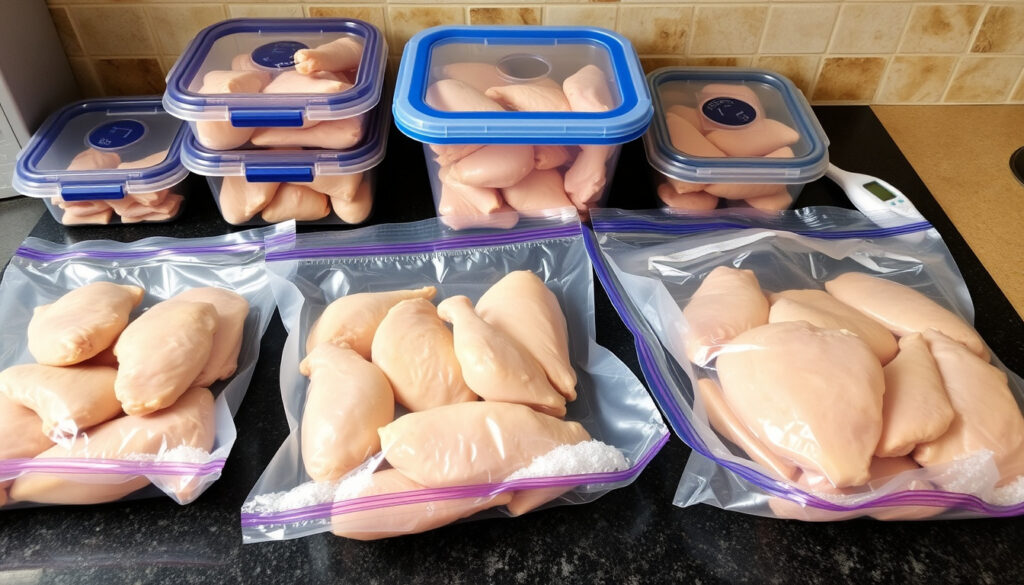
- Cool the chicken to 41°F within 4 hours of cooking. Divide into shallow containers to speed cooling.
- Portion into meal-sized amounts. Laura Fuentes (food blogger) recommends dividing into smaller portions for easier thawing.
- Pack in airtight, moisture-proof containers or heavy-duty freezer bags. Remove as much air as possible to prevent freezer burn.
- Label with the date and contents. Use within 3–4 months for best quality.
- Flash-freeze pieces on a tray before bagging to preserve texture, suggests EatingWell.
Can you refreeze cooked chicken after thawing?
No. EatingWell advises against repeated cook-freeze-thaw-reheat cycles. Once thawed, eat the chicken within 2 days. If you must refreeze, do so only after cooking the thawed chicken again (e.g., in a soup or casserole).
The implication: follow these steps to ensure safe and high-quality results.
Does cooked chicken freeze well?
Quality depends on how you prepare and package it. Well Stocked notes that texture may change slightly due to moisture loss, but the flavor holds up well if you freeze properly.
Does cooked chicken lose texture or flavor?
- Moist cooking methods (sauces, soups, braises) freeze better than dry-roasted or grilled chicken.
- Bone-in cuts and large pieces are more prone to texture loss and freezer burn.
- Shredded or diced chicken retains moisture better than whole breasts.
How to prevent freezer burn
- Use heavy-duty freezer bags and squeeze out excess air.
- Wrap in a layer of plastic wrap before bagging, especially for bone-in chicken.
- Keep the freezer temperature at 0°F (-18°C) or colder.
Best cuts of cooked chicken for freezing
Shredded chicken, diced meat in sauce, and soup base freeze best. Dry-roasted whole breasts are the most likely to turn dry. Tyson (poultry producer) suggests that cooked chicken can stay in the freezer for 6 to 9 months if temperatures remain at 0°F, though quality declines after 4 months.
Home cooks who freeze dry-roasted chicken may notice a lack of moisture after reheating. The fix: use the chicken in a saucy dish or reheat it with broth to restore texture.
The pattern: moist preparations preserve quality; dry cuts need extra care during reheating.
What is the best way to reheat frozen cooked chicken?
Reheating frozen cooked chicken requires bringing it to an internal temperature of 165°F (74°C) for safety, while preserving as much moisture as possible. Here are the most effective methods.
Reheating in oven or toaster oven
- Preheat to 350°F (175°C). Place chicken in a baking dish, cover with foil, and add a splash of broth or water.
- Heat for 20–25 minutes, or until the internal temp reaches 165°F.
- Uncover for the last 5 minutes to crisp the surface if desired.
Reheating in microwave
- Use medium power (50–70%) to avoid drying.
- Cover with a microwave-safe lid or damp paper towel. Stir or flip halfway through.
- Check temperature with a digital thermometer; add 30-second bursts as needed.
Reheating on stovetop
- Simmer in a sauce, broth, or gravy over low heat, stirring occasionally.
- This method works especially well for shredded or diced chicken and helps retain moisture.
- Heat until steaming throughout, about 5–10 minutes.
Reheating from frozen (without thawing)
- Yes, you can reheat directly from frozen, but expect longer cooking time and potential uneven heating.
- Use the oven or stovetop method; the microwave may leave cold spots.
- Always verify that the thickest part reaches 165°F.
Reheating from frozen without thawing increases the risk of uneven heating. Always check the center with a thermometer—don’t rely on visual cues alone.
The catch: direct reheating from frozen is possible but requires careful temperature monitoring to ensure safety.
Should I thaw frozen cooked chicken before reheating?
Thawing is recommended for even reheating, but it’s not strictly required. The safest method is to thaw in the refrigerator.
Thawing in refrigerator (recommended)
- Place frozen cooked chicken in the fridge for 24 hours.
- Once thawed, use within 2 days.
- This method keeps the chicken at a safe temperature throughout.
Thawing in cold water
- Submerge the sealed bag in cold tap water, changing the water every 30 minutes.
- Small portions thaw in 1–2 hours; cook immediately after thawing.
- Never use warm water—it can cause bacteria to multiply on the outer layers.
Can you reheat directly from frozen?
Yes, but it’s not ideal. EatingWell notes that direct reheating from frozen can lead to dry edges and a cold center. If you’re short on time, use the oven or stovetop with extra liquid and a longer cooking time.
For meal preppers, thawing in the fridge is the most reliable method. It preserves texture and ensures the chicken reheats evenly, reducing the risk of foodborne illness.
The pattern: proper thawing leads to better texture and safety; direct reheating is a fallback.
Why does chicken say not suitable for freezing?
You’ve seen it on supermarket labels: “not suitable for freezing.” This warning usually applies to raw chicken that was previously frozen and thawed, not to home-cooked chicken.
What does “not suitable for freezing” mean on packaging?
- It’s a labeling requirement for raw chicken that has been frozen and then thawed for retail sale.
- Freezing it again at home would create a second freeze-thaw cycle, which can degrade quality and increase safety risk.
- Cooked chicken does not carry the same restriction because it has been heated to a safe temperature.
Is it safe to freeze chicken labeled that way?
If you’ve already cooked that chicken, yes—freezing it is safe. Good Housekeeping UK confirms that the warning is about the raw product, not about cooked leftovers. Once cooked, the chicken is safe to freeze as long as you follow standard cooling and packaging guidelines.
How to store cooked chicken to avoid quality issues
- Freeze within 2 days of refrigerating the cooked chicken.
- Use airtight packaging to prevent freezer burn.
- Keep the freezer at 0°F (-18°C) and avoid frequent temperature fluctuations.
Upsides
- Reduces food waste—leftovers stay good for months.
- Convenient for meal prep: cook once, eat multiple times.
- Safe when handled correctly, per USDA guidelines.
- Flavor holds up well, especially in saucy dishes.
Downsides
- Texture may become dry or rubbery, especially for lean cuts.
- Freezer burn can occur if packaging isn’t airtight.
- Mild flavor loss over time, even in optimal conditions.
- Requires planning: thawing takes 24 hours in the fridge.
The implication: weighing convenience against quality trade-offs helps decide whether freezing fits your routine.
Cooked chicken can be frozen for 3 to 4 months.
It is perfectly safe and healthy to freeze cooked chicken, providing you’ve followed some rules beforehand.
The implication for anyone who cooks chicken in batches: freezing is a reliable tool, not a last resort. The key is to treat cooked chicken with the same care as raw—cool it quickly, pack it tightly, and reheat it thoroughly. For the home cook, the choice is clear: freeze smart, or throw away leftovers you could have used.
glad.com, fango.fi, alibaba.com, wikihow.com, tyson.com, foodandmeatcoop.com
Frequently asked questions
Can I freeze cooked chicken with gravy or sauce?
Yes. In fact, chicken in sauce or gravy freezes very well and can last 4–6 months. The liquid helps keep the meat moist during freezing and reheating. Use airtight containers and leave a little headroom for expansion.
Does freezing cooked chicken kill bacteria?
No. Freezing stops bacterial growth but does not kill bacteria. Cooking to 165°F (74°C) is the only way to ensure any bacteria present are destroyed. Always reheat frozen cooked chicken to that temperature.
Can I freeze cooked chicken cutlets or breaded chicken?
Yes, but the breading may become soggy after thawing. For best results, flash-freeze cutlets on a tray before bagging, then reheat in the oven to restore crispiness. Avoid microwaving breaded chicken.
How do I know if frozen cooked chicken has gone bad?
Thaw it and check for off-odors, sliminess, or discoloration. If the texture is sticky or the smell is sour, discard it. Freezer burn (dry, grayish patches) is safe to eat but may affect taste—trim those areas before reheating.
Can I freeze cooked chicken that was previously frozen raw?
Yes, as long as the raw chicken was thawed safely in the refrigerator and cooked promptly. Once cooked, the chicken can be frozen again. However, avoid multiple freeze-thaw cycles to maintain quality.
What is the best way to freeze shredded cooked chicken?
Shred the chicken, pack it into freezer bags, flatten to remove air, and seal. Shredded chicken freezes quickly and thaws in minutes. It’s ideal for soups, tacos, and salads. Use within 4 months.
Can I freeze cooked chicken soup?
Yes. Cool the soup completely, then transfer to freezer-safe containers, leaving an inch of headspace. Chicken soup can be frozen for 4–6 months. Thaw in the refrigerator and reheat on the stovetop. Note: potatoes and cream may change texture after freezing.
For more guidance, check out our guides on how to thaw chicken safely and chicken storage guidelines.
More related posts
 Right Eye Twitching Female: Medical, Superstition & Spiritual
 New Zealand Student Final Year Funding: Fees Free Guide
 iPhone 14 Screen Protector: Should You Use One? Guide & Types
 Best Wide Angle Lenses 2026: Top Picks for Every Mount
 ANZ goMoney Login: Step-by-Step Guide & Troubleshooting
 Translate Portuguese to English: Best Free Tools
 Away in a Manger Lyrics: Full Text, History, and Author
