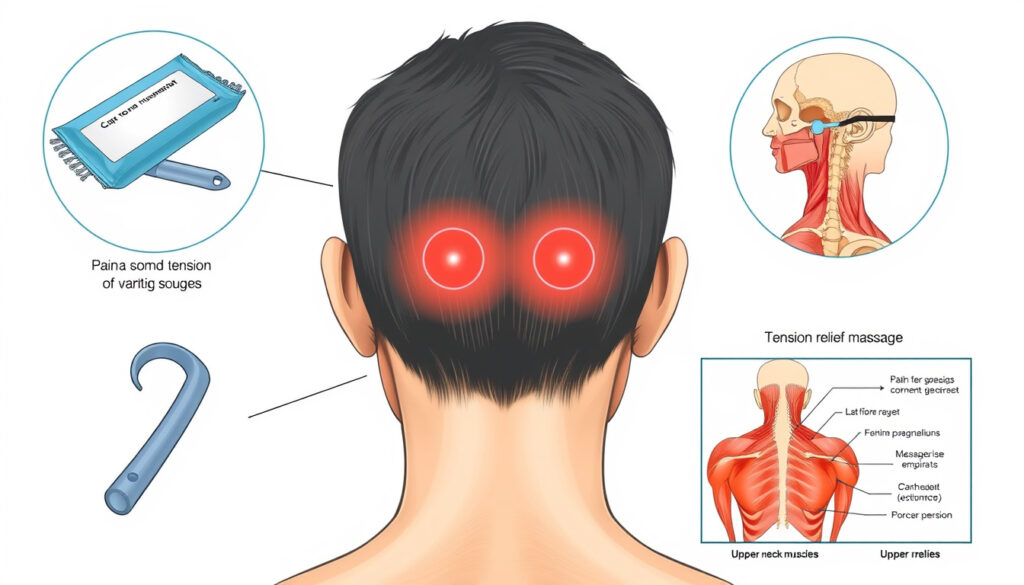
Headache Back of Head: Causes, Red Flags & Relief Guide
Anyone who’s felt a dull ache or sharp jab at the base of their skull knows that back-of-head pain can be both unsettling and frustrating. This guide helps you sort through the most common causes — from tension headaches to occipital neuralgia — and know when that pain might signal something more urgent.
Tension headache prevalence: Most common primary headache (PMC review of primary headache disorders) ·
Occipital neuralgia: Rare, exact rates unknown (NIH analysis of red flag criteria) ·
Red flag screening: SNOOP4 mnemonic for secondary headache (Norton Healthcare provider guide)
Quick snapshot
- Dull, achy band-like pressure around the head (PMC review of primary headache disorders)
- Often accompanied by neck tension and fatigue (same source)
- Usually responds to over-the-counter pain relievers (PMC review of primary headache disorders)
- Starts in the upper neck and radiates to the occipital region (same source)
- Worse with neck movement or sustained posture (same source)
- Benefits from physical therapy and posture correction (same source)
- Sharp, shooting, or electric pain along the occipital nerve path (Medanta patient education blog)
- Tenderness over the occipital nerve (Medanta patient education blog)
- Diagnostic nerve block confirms the diagnosis (Medanta patient education blog)
- Pounding sensation at the back of the head
- Associated with very high blood pressure (>180/120 mmHg)
- Requires blood pressure management, not just pain relief
The National Headache Pathway (NHS National Headache Pathway) outlines key red flags that can help distinguish a benign headache from a secondary cause that needs immediate attention. By the end, you’ll have a clear triage framework and practical relief steps to discuss with your doctor.
Five key facts about posterior headache, one pattern: most causes are benign, but a few demand urgent evaluation.
| Label | Value |
|---|---|
| Most common cause | Tension-type headache, often with neck muscle tightness (PMC review) |
| Red flag to always evaluate | Sudden, severe ‘thunderclap’ headache (NHS National Headache Pathway) |
| Self-care first step | Heat application to neck and shoulders (clinical consensus) |
| Specialist for refractory pain | Neurologist for occipital nerve block (Medanta patient education blog) |
| Hypertension threshold | Blood pressure >180/120 mmHg (MSD Manual Professional) |
What causes headaches at the back of the head?
Posterior head pain can arise from several sources, each with a distinct mechanism and treatment approach. The most common culprits are tension-type headache, cervicogenic headache, occipital neuralgia, and — less often — hypertension.
Tension headache
- Muscle tightness in the neck and scalp creates a dull, band-like pressure (PMC review of primary headache disorders)
- Often triggered by stress, poor posture, or fatigue
- Responds to rest, heat, and over-the-counter analgesics
The implication: tension headache is the most common type, but it rarely signals danger. The catch is that it can mimic other causes, so a careful history matters.
Cervicogenic headache
- Originates from the cervical spine — the upper neck joints — and radiates pain to the occiput (same source)
- Worsens with neck movement or sustained awkward postures
- Neck examination often reveals restricted range of motion or tenderness
Why this matters: cervicogenic headache is often mislabeled as a migraine or tension headache, delaying effective treatment like physical therapy.
Occipital neuralgia
- Sharp, stabbing, or electric-shock pain along the path of the greater or lesser occipital nerve (Medanta patient education blog)
- Pain is usually unilateral and may be triggered by light touch over the scalp
- A diagnostic nerve block — injecting anesthetic near the nerve — can confirm the diagnosis and provide relief
The pattern: occipital neuralgia is less common but highly recognizable when you know the classic symptoms.
Medication overuse headache
- Occurs when acute headache medications (triptans, NSAIDs, opioids) are used more than 10–15 days per month
- Pain is often present upon waking and can be bilateral or posterior
- Treatment requires withdrawal of the overused medication under medical supervision
Patients who rely on frequent pain relievers for back-of-head pain may actually be making their headaches worse. The paradox: treating the headache with medication can become the cause of the headache.
Is pain in the back of the head serious?
Most posterior headaches are benign, but a small fraction indicate a life-threatening condition. The challenge is knowing which symptoms to worry about.
Red flags: sudden onset, thunderclap headache
- A thunderclap headache — severe pain that reaches its peak within seconds to minutes — is a major red flag for subarachnoid hemorrhage (NHS National Headache Pathway)
- Also consider reversible cerebral vasoconstriction syndrome or cervical artery dissection
Neck stiffness and fever
- Fever combined with neck rigidity and photophobia raises suspicion for meningitis or meningoencephalitis (Medanta patient education blog)
- Immediate lumbar puncture is needed for cerebrospinal fluid analysis
Neurological deficit signs
- Loss of consciousness, double vision, limb weakness, or ataxia accompanying occipital pain constitute a neurologic emergency (Medanta patient education blog)
- These signs point to posterior-fossa pathology such as hemorrhage or stroke
Headache after head injury
- Occipital pain after trauma can indicate epidural hematoma, unstable cervical fracture, or vertebral artery dissection (Medanta patient education blog)
- Any new headache following a fall or accident warrants imaging
The SNOOP4 mnemonic — Systemic symptoms, Neurologic symptoms, Onset abrupt, Older age, Pattern change, Precipitated by Valsalva, Postural aggravation, Papilledema — provides a structured way to remember red flags (Norton Healthcare provider guide).
When should I be concerned about back of head pain?
Certain contexts make posterior headache more worrisome. The timing, trajectory, and patient profile matter as much as the pain itself.
Headache that wakes you at night
- Progressive headache or headache that wakes the patient from sleep is a red flag for raised intracranial pressure (Medanta patient education blog)
- Morning-predominant pain that worsens over weeks and is aggravated by coughing or bending forward also suggests intracranial hypertension
Worsening over several weeks
- A new progressive headache in a patient over 50 is a red flag because secondary pathology becomes more likely with age (NHS National Headache Pathway)
- Giant cell arteritis should be considered in older adults with new headache, especially if jaw claudication or visual symptoms are present (MSD Manual Professional)
New headache in a patient older than 50
- Age over 50 with new headache should be evaluated for giant cell arteritis (MSD Manual Professional)
- Other causes include intracranial mass lesions and subdural hematoma
Headache with cancer or immune-compromised state
- Headache in a cancer patient may indicate metastasis, especially if accompanied by focal signs or cognitive change (PMC review)
- Immunocompromised patients are at risk for opportunistic infections like cryptococcal meningitis
How to relieve headache in back of head
Relief depends on the underlying cause. Here are step-by-step approaches for the most common scenarios.
Apply heat or ice to the neck and shoulders
- Heat relaxes tense neck muscles in tension-type headache (PMC review)
- Ice can reduce inflammation in acute cervicogenic headache
- Apply for 15–20 minutes, with a barrier to protect the skin
Stretch and improve posture
- Poor posture and forward head carriage are modifiable risk factors for cervicogenic headache (same source)
- Simple chin tucks and upper trapezius stretches can reduce tension
- Ergonomic adjustments at work (monitor height, chair support) help prevent recurrence
Over-the-counter pain relief (acetaminophen, NSAIDs)
- NSAIDs (ibuprofen, naproxen) are first-line for acute treatment of tension headache (PMC review)
- Acetaminophen is an alternative for those who cannot tolerate NSAIDs
- Do not exceed recommended doses; frequent use can lead to medication overuse headache
Prescription treatments for specific diagnoses
- Local nerve blocks can relieve occipital neuralgia pain for weeks to months (Medanta patient education blog)
- Muscle relaxants (e.g., tizanidine) may help in cervicogenic headache
- Anticonvulsants (gabapentin, pregabalin) or tricyclic antidepressants are used for neuropathic pain in occipital neuralgia
If self-care and OTC medications don’t improve your posterior headache within a week, or if you need them more than two days per week, see a doctor. Frequent use of acute medications can transform episodic headache into chronic daily headache.
Does a brain tumor headache feel like pressure?
This is one of the most common fears behind a new headache. Understanding the typical pattern can help separate anxiety from genuine concern.
Typical brain tumor headache features
- Brain tumor headache is usually dull, pressure-like, and bilateral (Medanta patient education blog)
- It is worse with bending forward, coughing, or lying down
- New headache with morning nausea or vomiting is a classic pattern
Differentiating from benign headache
- Most brain tumor headaches are accompanied by other neurological symptoms such as seizures, focal weakness, or cognitive changes
- Isolated headache without any other signs is rarely the presenting symptom of a brain tumor
- Red flags for tumor-related headache include progressive nature, early-morning predominance, and lack of response to typical headache treatments
The catch: the vast majority of posterior headaches are not caused by brain tumors. However, a new pattern that fits the red-flag profile warrants imaging.
What is occipital neuralgia?
Occipital neuralgia is a specific pain syndrome that can mimic other headache types. Recognizing it leads to targeted treatment.
Symptoms: sharp, shooting pain from the base of the skull
- Pain is confined to one or both occipital nerve distributions — from the suboccipital area to the scalp (Medanta patient education blog)
- Described as stabbing, electric, or shock-like
- Trigger zones may cause pain with light touch or combing hair
Causes: nerve entrapment or irritation
- Common causes include trauma, cervical spine degeneration, or muscle entrapment
- Rarely, it can be secondary to tumor or infection
Diagnosis: physical exam and response to nerve block
- Diagnosis is primarily clinical, based on history and tenderness over the occipital nerve
- A diagnostic nerve block — injecting anesthetic near the nerve — confirms the diagnosis if it provides temporary relief
Treatment: nerve blocks, medication, surgery in refractory cases
- First-line treatment includes anticonvulsants (gabapentin) or tricyclic antidepressants (amitriptyline)
- Occipital nerve blocks with local anesthetic and steroid can provide relief for weeks to months
- In refractory cases, surgical options include nerve decompression or neurostimulation
Occipital neuralgia is often underdiagnosed because its symptoms overlap with migraine and cervicogenic headache. A simple nerve block can both confirm the diagnosis and provide rapid relief — giving patients a clear pathway forward.
Confirmed facts vs. what’s still unclear
Confirmed facts
- Tension headache is the most frequent cause of posterior headache (PMC review)
- Cervicogenic headache originates from the cervical spine (same source)
- Occipital neuralgia responds to nerve blockade (Medanta patient education blog)
- Thunderclap headache is a red flag for subarachnoid hemorrhage (NHS National Headache Pathway)
- SNOOP4 mnemonic helps identify secondary headache red flags (Norton Healthcare provider guide)
What’s unclear
- Exact prevalence of occipital neuralgia is unknown due to underdiagnosis (NIH analysis of red flag criteria)
- Long-term efficacy of surgical interventions for occipital neuralgia requires more study
- Optimal duration of medication overuse headache withdrawal is not standardized
Expert perspectives
“Tension-type headache is the most common primary headache disorder, affecting about 1.89 billion people worldwide. It is characterized by a pressing or tightening quality of mild to moderate intensity.”
— National Institute of Neurological Disorders and Stroke (NINDS)
“Red flags for secondary headache include systemic symptoms, neurologic symptoms, abrupt onset, older age, and a change from previous headache pattern — the SNOOP4 mnemonic.”
— American Headache Society (Norton Healthcare provider guide)
“Headache disorders are among the most common disorders of the nervous system, with an estimated global prevalence of 50% among adults.”
— World Health Organization (WHO headache fact sheet)
For the patient with a new posterior headache, the choice is clear: start with self-care and a careful symptom diary, but if red flags appear — sudden onset, fever, neurologic deficit, or progressive pattern — seek emergency care immediately. For everyone else, a structured approach to diagnosis and treatment can turn a frustrating, recurring pain into a manageable condition.
Related reading: **Right Side Abdominal Pain: Causes and Red Flags**
litfl.com, moph.gov.lb, wiki.ostrowonline.usc.edu, clinicalpainadvisor.com, pmc.ncbi.nlm.nih.gov, pmc.ncbi.nlm.nih.gov
Frequently asked questions
Can dehydration cause a headache at the back of the head?
Dehydration can trigger headaches, typically as a diffuse, dull ache rather than strictly posterior. However, because dehydration can worsen muscle tension, it may contribute to occipital pain. Staying hydrated is a simple preventive measure.
Is it normal to have a headache at the back of the head every day?
Daily or near-daily posterior headache is not normal. It may indicate chronic tension headache, cervicogenic headache, medication overuse, or — less often — an underlying structural problem. A medical evaluation is recommended.
Can a neck injury cause a headache at the back of the head?
Yes. Neck injuries, especially whiplash, can lead to cervicogenic headache
More related posts
 15000 Students Fail NCEA – 2024 Results Explained
 Mount Maunganui Golf Club: Membership, Fees & Course Overview
 Immigration Advisers New Zealand Ltd – IAA Licensing Status
 Te Rūnanga o Kirikiriroa: Hamilton Social Services Guide
 Epson EcoTank ET-2810: Pros, Cons, and Comparison to ET-2850
 Chemist Warehouse St Lukes: Hours, Phone Number, and Pricing
 Gillette Fusion 5 Blades: Cost & Performance
 How Much Did Ryan Fox Win Today? $3.2M Open Prize
