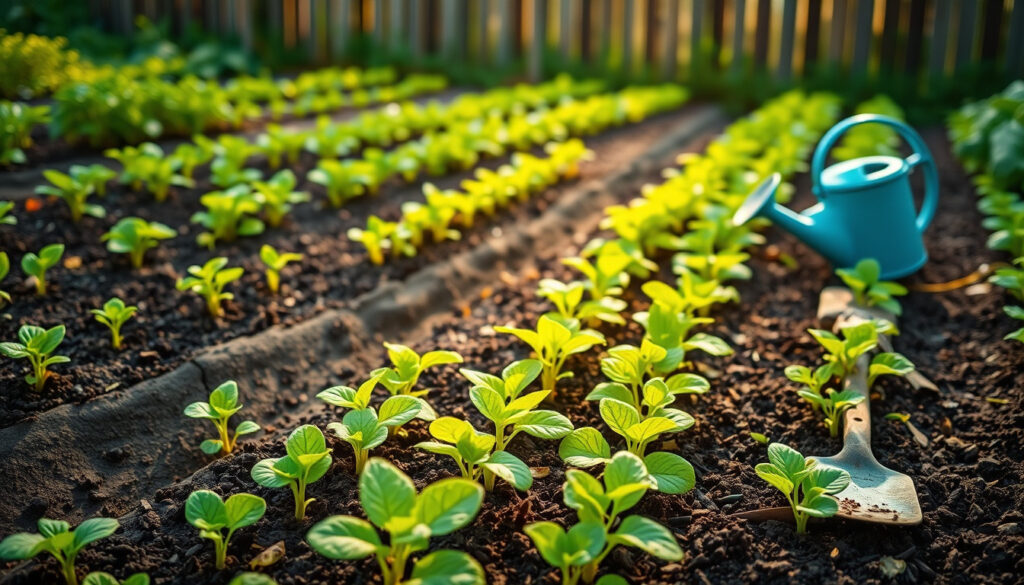
How to Start a Vegetable Garden: Beginner’s Guide with Tips
Every new gardener knows the moment: first packet of seeds, soil still cold, and no real idea whether anything will come up. A productive first vegetable plot is closer than it looks — it doesn’t have to be big or expensive, and Ireland’s agriculture authority Teagasc says the practical route runs through raised beds, easy crops, and a planting calendar you can follow in practically any garden.
Sunlight needed per day: 6+ hours (Quickcrop — Irish vegetable-growing supplier) ·
Best planting window (temperate climates): March–May (Arboretum — Irish garden centre) ·
Easiest starter crops: cabbage, onion sets or beetroot (Teagasc — Ireland’s agriculture authority) ·
Best drainage fix for damp gardens: raised beds (Bord Bia — Ireland’s food board) ·
Minimum raised bed depth: 25 cm (West Cork People — Irish regional publication)
Quick snapshot
- Most vegetables need at least 6 hours of direct sun a day (Quickcrop (Irish vegetable-growing supplier))
- Raised beds are the best drainage fix in a damp climate (Bord Bia (Ireland’s food board))
- Starting small with easy crops is the route Teagasc’s vegetable guide recommends (Teagasc (Ireland’s agriculture authority))
- Exact planting dates shift with your local microclimate and soil condition
- Whether raised beds out-yield in-ground plots over many seasons isn’t settled in controlled studies
- South-facing advice is directional — shade patterns depend on the site
- Onions: February to April · Seed potatoes: March · Carrots: April (The Polytunnel Company (Irish grow-your-own guide))
- Main outdoor sowing window: March–May (Arboretum (Irish garden centre))
- Give plants a full day of sun if you can — six hours is the floor (Quickcrop (Irish vegetable-growing supplier))
- Place beds close to the house so daily checks become effortless (West Cork People (Irish regional publication))
- Mulch, water in the morning, and plan next year’s rotation (Arboretum (Irish garden centre))
Key facts at a glance
Seven rows, one pattern: every route to a first harvest runs through sun, soil depth and the spring calendar.
| Fact | Detail | Source |
|---|---|---|
| Sunlight needed | 6+ hours of direct sun daily | Quickcrop (Irish vegetable-growing supplier) |
| Main outdoor sowing window | March–May | Arboretum (Irish garden centre) |
| Practical raised bed width | 1–1.2 m, so you can reach the middle without stepping in | West Cork People (Irish regional publication) |
| Starter crops (Teagasc) | Cabbage, onion sets, beetroot | Teagasc (Ireland’s agriculture authority) |
| Starter crops (Polytunnel) | Potatoes, carrots, lettuce, onions, peas, beans | The Polytunnel Company (Irish grow-your-own guide) |
| Seed potatoes | Plant in March for a summer harvest; carrots follow in April | The Polytunnel Company (Irish grow-your-own guide) |
| Bed orientation | Roughly north–south, so sunlight reaches both sides | West Cork People (Irish regional publication) |
The pattern: the table rewards restraint — fewer crops, sensible depths, and dates treated as windows, not deadlines.
What is the best month to start a vegetable garden?
If you want one answer: spring. In a temperate climate like Ireland’s, the outdoor vegetable season runs mainly from March to May, and the window matters more than the exact date.
Spring planting window
- Onions: sets go in from February to April — they’re hardy through the last cold weeks.
- Seed potatoes: plant in March for a summer harvest.
- Carrots: sow in April, in sandy, well-drained soil, for a late-summer harvest.
The three dates above come from The Polytunnel Company’s Irish grow-your-own guide, and they line up with the March-to-May window in the snapshot.
Frost dates and soil temperature
- The practical test is the soil, not the calendar: if a handful stays wet and sticky, wait.
- Check local frost dates for your region before pushing the window.
- A raised bed drains faster, which lets you start earlier in damp springs — the Bord Bia drainage argument from the snapshot.
Regional adjustments
- Microclimates shift dates by days or weeks — your garden’s shelter, soil and rainfall matter more than a national average.
- If you garden in the Southern Hemisphere, everything flips: our guide to When Does Spring Start in NZ? 2026 Dates & Seasons maps the reverse calendar.
The takeaway: don’t wait for a perfect date. Aim for the March-to-May window, start with hardy crops, and let your soil tell you when it’s ready.
What is the easiest way to start a vegetable garden for beginners?
The easiest route is almost boring: one bed, a few crops, and a spot you walk past every day. Fancy systems come later.
Choose a sunny, sheltered spot
- The six-hour sunlight floor from the snapshot above is the real minimum — aim for more.
- Shelter from strong wind matters almost as much as sun; exposed plots dry out and snap young plants.
Six hours of sun (the Quickcrop floor from the stats line) plus daily visibility beats twice the space in a cold corner. A bed you can see from the kitchen gets watered; a bed behind the shed becomes a green museum.
Start small: one raised bed or a few containers
- Raised beds or large containers filled with compost are the proven beginner setup (Arboretum — Irish garden centre)
- Three to five vegetable types is plenty for year one — a beginner who waters five crops will beat a beginner who plants twenty.
Prepare soil or use quality potting mix
- Compost is the great equaliser: it feeds, holds moisture and keeps the soil loose.
- In a raised bed, make sure the compost-rich layer is deep enough for roots to spread before they hit harder ground.
What this means: the easiest method isn’t a perfect design — it’s a small, visible, well-fed bed that you actually show up to.
The consequence: a small, visible, well-fed start is the one that becomes next year’s garden.
What is the easiest vegetable to grow for beginners?
There’s no single winner, but there are two shortlists worth trusting — both appear in the key facts table above.
Lettuce, radish, and beans
- Lettuce: quick, forgiving, and happy in partial shade — pick leaves for months instead of harvesting one sad head.
- Radish: the impatience crop. Sow it, thin it, and eat it before most other seeds have germinated.
- Beans: climbing beans are the bonus plant — heavy harvests from a small footprint, and they improve the soil as they grow.
Why these are forgiving
- They germinate fast, tolerate cool Irish weather, and don’t punish a missed watering day.
- Teagasc’s beginner shortlist — cabbage, onion sets and beetroot — runs on the same logic: hardy, low-fuss, satisfying.
- The Polytunnel list — potatoes, carrots, lettuce, onions, peas and beans — adds reliable producers to the same group.
Success tips for first-time growers
- Sow little and often, so harvests arrive in waves instead of one giant glut.
- Thin seedlings early — crowded seedlings grow into weak plants.
- Harvest young. Baby vegetables taste better, and picking encourages more growth.
“Easiest” still assumes you’ll show up. Lettuce and peas forgive a missed watering; they don’t forgive a month of neglect. The easiest crop is the one you actually harvest.
The trade-off: a shortlist is a starting point, not a contract. Grow what your household eats — the easiest vegetable in the world is wasted if nobody likes it.
What is the best layout for a vegetable garden?
The best layout is the one you can reach in slippers — and it follows a quiet compass logic.
North–south row orientation
- Set beds out roughly north–south so the sun travels down both sides and neighbouring beds shade each other less — the West Cork People point from the key facts table.
- If your space only allows one orientation, choose the one that keeps tall crops from throwing shade on shorter ones.
Companion planting principles
- Companion planting is useful, but the strongest consensus is about rotation, not magical pairings: keep related crops moving between beds year to year.
- The pairs to treat with care — tomatoes with potatoes, onions with beans, carrots with dill — are cautions about competition and disease, not garden drama.
Access paths and spacing
- Make paths wide enough that you never step onto the bed — compacted soil is the quiet enemy of roots, and the bed system exists partly to stop it.
- Between rows, leave enough room to kneel and reach — about a foot of path is a reasonable minimum.
- Good spacing between plants means airflow, which keeps fungal problems down.
The pattern: good layout is mostly subtraction — fewer beds, wider paths, and a plan that doesn’t require you to tread where roots grow.
Which vegetables should not be planted together?
The honest answer is tamer than the internet suggests: few pairings are catastrophic, but several deserve respect.
Classic antagonistic pairs
- Tomatoes and potatoes are close relatives and share blight risks — keep them apart, and keep sweetcorn away from tomatoes too.
- Onions and beans can stunt each other’s growth; separate beds are the safer call.
- Carrots and dill can cross-pollinate and produce poor seed when grown side by side.
The sources this article relies on push the simpler, sturdier rule: don’t grow the same crop family in the same soil year after year — the rotation argument Ireland’s agriculture authority makes in its vegetable-growing guide.
Root competition and allelopathy
- Root vegetables compete hard with anything planted too close; give them their own zone.
- Some plants release chemicals that slow neighbours down — another reason to rotate rather than repeat.
Best companion combinations
- Lettuce and radish mix well: radish marks the row and loosens soil while lettuce fills the space.
- Beans and brassicas are often paired in Irish gardens — the beans climb while the cabbage holds the bed.
The implication: don’t build a whole plan around avoiding “bad neighbours.” Rotation, spacing and healthy soil do the real work — in a one-bed garden just as in a field.
How deep do garden beds need to be for vegetables?
Twenty-five centimetres — about ten inches — is the practical floor for most vegetables in a raised bed, and width matters just as much: 1 to 1.2 metres lets you reach the middle without stepping in.
Minimum depth by vegetable type
- Leafy greens are the shallow-rooted exception — lettuce and chard are comfortable in less than the full 25 cm.
- Root crops are the depth test: carrots and parsnips want every centimetre you can give them.
- If you build one bed only, 25 cm deep and roughly 1–1.2 m wide will carry almost everything a beginner will plant.
Raised bed vs in-ground
- In-ground plots work if drainage is good; raised beds simply get you there faster in a rainy climate.
- Raised beds also warm up earlier in spring, which stretches your March-to-May window at both ends.
Deeper is not automatically better. A 60 cm bed you can’t reach across creates its own problems — the practical target is 25 cm of good soil, not a giant mound.
Why this matters: depth is easy to over-engineer and hard to fix later. Hit 25 cm, keep the width sensible, and spend your remaining effort on compost and sunlight.
What are some common mistakes to avoid in garden plans?
Almost every failed first garden fails in one of three ways: too much planted, soil ignored, or a schedule that only exists on paper.
Overcrowding seedlings
- Seed packets give spacing for a reason; crowding seedlings produces spindly, disease-prone plants.
- Thin early and be ruthless — one strong plant beats three struggling ones.
Ignoring soil preparation
- Test your soil before building beds; a simple test tells you whether you’re in the roughly 6.0–7.0 range most vegetables like.
- Add organic matter before planting, not when things start failing in July.
Planting without a schedule
- Stagger sowings so harvests arrive continuously instead of one overwhelming glut.
- Keep a five-minute journal: what went in, when, and what happened. It becomes next year’s plan.
The pattern: simpler first seasons tend to become longer gardening habits.
The seven steps to your first raised-bed vegetable garden
This is the whole plan condensed — no exotic gear, no forty-plant wishlist.
- Pick the spot. Six-plus hours of sun, shelter from wind, and close enough to the kitchen that you’ll visit daily.
- Build or buy one raised bed. Aim for 25 cm deep and 1–1.2 m wide, at a length that fits your space.
- Fill it with quality compost and topsoil. Roots should hit rich, loose material from day one.
- Choose three to five crops. Pick from Teagasc’s shortlist (cabbage, onion sets, beetroot) or the Polytunnel list (potatoes, carrots, lettuce, onions, peas, beans).
- Sow to the calendar. Onions from February, seed potatoes in March, carrots in April — then keep the March-to-May window in view.
- Water, mulch and visit. Consistency beats intensity; a dry week in June does more damage than a cold week in April.
- Harvest early and often, and keep notes. Note what grew well and where — next year’s rotation depends on it.
The consequence: follow these seven steps and you’ll have a working plot in one season; ignore them and you’ll likely be starting again next April.
Vegetable garden calendar: what to do and when
Five seasons, one argument: sow with the calendar instead of against it, and watering, weeding and harvesting all get easier. The spring rows come straight from the Polytunnel calendar and the Arboretum window cited above.
| Period | What to do |
|---|---|
| February–March | Prepare beds, order seeds, and start tender crops indoors |
| March–May | Main outdoor sowing window: onions, seed potatoes, carrots and hardy greens |
| May–June | Transplant warm-season crops and direct-sow squash and beans |
| July–August | Harvest early crops; sow kale and carrots for autumn |
| September–October | Last harvest, clear spent beds, add compost for next spring |
The rhythm: the spring rows are the ones Irish sources agree on; the summer and autumn rows are the natural follow-through of the same plan. Adjust dates to your microclimate and keep notes.
What’s certain and what’s not
Read this before buying seeds — it separates the guidance Irish sources agree on from the open questions.
Confirmed facts
- Vegetables need at least 6 hours of direct sun a day (Quickcrop (Irish vegetable-growing supplier)).
- Raised beds are the best-supported drainage fix for damp Irish gardens (Bord Bia (Ireland’s food board)).
- A raised bed depth of about 25 cm suits most vegetables (West Cork People (Irish regional publication)).
- Starting small with easy crops is the recommended beginner path (Teagasc (Ireland’s agriculture authority)).
What’s unclear
- Exact optimal planting dates vary by microclimate and season — no single calendar date is right everywhere.
- Whether raised beds out-yield in-ground beds over many years isn’t settled by controlled comparisons.
- Companion-planting “never together” lists are inconsistent in the evidence behind them.
- South-facing siting advice is directional; shade and wind patterns depend on your specific site.
The balance: the fundamentals — sun, drainage, bed depth, easy crops — rest on official Irish sources. The fine print of dates and pairings is more local, more variable, and worth watching in your own plot.
What the experts say
Two voices carry most of the authority in Irish beginner gardening: the state’s agriculture agency and its food board.
“Choose an open though not exposed site, where plants can receive maximum sunlight.”
— Teagasc (Ireland’s agriculture authority)
“When planning a new vegetable plot, raised beds are the best way to assist drainage in Ireland’s damp climate.”
— Bord Bia (Ireland’s food board)
The through-line: official Irish advice converges on the same two moves — choose an open, sheltered site, and use raised beds to manage the rain.
A realistic first season
Anyone can grow vegetables; the first season mostly asks for patience and a pair of wellies. Once the harvest starts arriving, the easiest way to use it is in the kitchen — Easy Recipes for Beginners: Quick Meals in Minutes turns fresh beans into dinner rather than guilt. For a beginner in Ireland, the choice is clear: build one raised bed, plant cabbage, onion sets or beetroot, and let the March-to-May window do the heavy lifting — or wait until June and spend the rest of the summer explaining why the garden never happened.
whitesagri.ie, horkans.ie, quickcrop.ie, keanscm.ie, homegrown.ie
Frequently asked questions
Can I start a vegetable garden in pots?
Yes. Large containers filled with quality compost are a proven beginner route — the same logic that makes raised beds work, just smaller. Put them in the sunniest, most sheltered spot you have.
What can I plant in March in Ireland?
Onions (from February to April), seed potatoes for a summer harvest, and the first hardy sowings as the March-to-May outdoor window opens. Carrots follow in April, in sandy, well-drained soil.
How much does it cost to set up a beginner vegetable garden?
The sources we reviewed don’t quote a fixed price. A single raised bed, a few bags of compost and three packets of seed are enough to start; costs rise with size, not with success.
Do I need to rotate crops in a small garden?
Yes. Moving crop families between beds or sections each year reduces disease pressure — the same guidance applies at any scale, including a one-bed garden.
How often should I water a new vegetable garden?
Check the soil rather than the clock. New seeds and transplants need consistent moisture, while established plants cope with more variation. Morning watering gives foliage time to dry before evening.
What is the best soil mix for raised beds?
Quality compost mixed with existing topsoil is the practical standard. Keep the soil loose, make sure it drains well, and top up with organic matter each year.
How do I protect young plants from slugs?
Start with healthy plants, clear debris, and treat evening patrols as part of Irish gardening. Morning watering helps plants dry before nightfall, which makes beds less slug-friendly overnight.
When should I harvest lettuce for the best taste?
Pick leaves young, in the morning, as part of a cut-and-come-again routine. Regular small harvests keep lettuce sweet, tender and productive for weeks.
The common thread: each FAQ answer comes back to the same beginner rule — start small, keep the bed visible, and let the calendar do the planning.
More related posts
 What Time Does Warehouse Close? Hours & Policies
 Lake Ruataniwha Holiday Park: Rates, Map & Reviews
 Rhythm and Vines Lineup 2026: Full Artist List
 Bigg Boss 19 Winner Gaurav Khanna: Prize Money Details
 Early Stages of Scabies: Symptoms, Treatment & Key Facts
 Air New Zealand Cancelled Flights List Today: Check Status
 Support Staff Collective Agreement: 2024-2026 Pay Details
 Houses for Sale Taumarunui: 82 Trade Me, 100 RECO Listings
