Picton to Wellington Ferry 2025: Prices, Timetable & Comparison
Few journeys in New Zealand carry the same mix of practicality and scenery as the ferry across Cook Strait, and choosing between Interislander and Bluebridge can feel as wide as the strait itself. This guide compares both operators using official timetable data, fare rules, and passenger feedback — so you can pick the crossing that fits your trip.
Crossing Time: 3 to 3.5 hours ·
Operators: 2 (Interislander & Bluebridge) ·
Distance: 92 km (57 miles) across Cook Strait ·
Typical Adult Fare: $50 – $100 NZD one-way
Quick snapshot
- Both operators sail daily between Picton and Wellington (Interislander Ferry timetable)
- Standard crossing takes 3–3.5 hours under normal conditions (Bluebridge Ferry Timetable)
- Vehicle transport available on all sailings (Interislander fares and payment options)
- Exact cheapest day varies by season and operator promotions
- Future ferry tunnel plans are speculative — no confirmed project
- First roll‑on/roll‑off ferry service launched in 1962 — Interislander predecessor
- Bluebridge began operations in the 1990s
- 2020: Both operators upgraded fleet (Kaiarahi, Connemara)
- Book 2–4 weeks ahead for best vehicle availability
- Off‑peak midweek sailings often cheaper
Here are the essential statistics for the Picton to Wellington crossing.
| Distance | 92 km (57 mi) across Cook Strait |
| Duration | 3 hours (minimum) to 3.5 hours |
| Operators | 2: Interislander and Bluebridge |
| Adult Walk‑On Fare | $50–$100 NZD (year‑round average) |
| Vehicle Fare | $100–$200 NZD per standard car |
| Ferry Type | Roll‑on/roll‑off (RO‑RO) passenger and vehicle ferries |
How much does the ferry from Picton to Wellington cost?
Pricing for the Cook Strait crossing depends on season, operator, and how far ahead you book. Adult walk‑on tickets typically range from $50 to $100 NZD one‑way across both operators, but deep discounts are available for winter sailings.
Interislander’s winter foot passenger fares start at $50 for adults and $25 for children, according to its official fare page (Interislander fares and payment options). Bluebridge’s adult fares appear slightly higher in some published tables — $80 to $85 — though these are from a third‑party aggregator and may not reflect current promotions (Ferry New Zealand Bluebridge ticket prices).
What is the price range for adults and vehicles?
For a standard car, vehicle fares add $100–$200 NZD one‑way. Interislander applies a flat vehicle charge visible at booking, while Bluebridge’s rates are listed per vehicle length. Both operators require vehicle check‑in 60 minutes before departure.
Are there discounts for bookings made in advance?
Yes. Interislander’s Saver fare allows changes up to 1 hour before departure with fees ($20 per person, $30 per vehicle). Its Flexible and Refundable fares give more latitude but cost more upfront (Interislander fare rules). Bluebridge offers loyalty rewards through its Bluebridge Rewards program. The cheapest day varies; industry sources suggest midweek winter sailings are often the lowest.
How do Interislander and Bluebridge fares compare?
Interislander tends to lead on base winter walk‑on prices, while Bluebridge’s fare structure includes more flexible change policies. Neither operator publishes a permanent “cheapest day” — pricing is dynamic. The trade‑off: for budget travelers, Interislander’s winter Saver fares are hard to beat; for schedule flexibility, Bluebridge’s multiple daily sailings may be worth the extra cost.
How long is a ferry from Picton to Wellington?
The standard crossing time for both operators is 3 to 3.5 hours under normal weather conditions. Interislander advises passengers to allow three and a half hours for the sailing (Interislander Ferry timetable). The distance across Cook Strait is 92 km (57 miles), and ferry speed typically runs 25–30 km/h.
What is the exact sailing time for each operator?
Both Interislander and Bluebridge list similar duration windows. Bluebridge’s timetable does not state a separate duration, but published schedules match the 3‑hour baseline. Weather‑related delays of 30–60 minutes are possible in rough conditions.
Does weather affect the crossing duration?
Yes. Cook Strait is notorious for changeable winds and swell. In summer, delays are less common; winter storms can extend the crossing by up to an hour. Both operators monitor conditions and may cancel sailings if wind speeds exceed safe limits.
How does the distance relate to travel time?
At 92 km, the ferry’s 25–30 km/h average speed explains the 3‑hour minimum. The slower pace reflects fuel efficiency and stability rather than engine power — the route is a scenic cruise through the Marlborough Sounds at both ends.
Choosing between a 3‑hour and 3.5‑hour crossing is less about the clock than about what happens onboard. Interislander’s larger ships offer cinema and playgrounds; Bluebridge’s compact fleet focuses on comfortable lounges. Duration alone isn’t the deciding factor.
The implication: duration alone does not determine the best crossing; onboard experience matters more.
Which is better, Bluebridge or Interislander?
Answering “better” depends on your priorities: price, frequency, onboard experience, or loyalty perks. The table below summarises the key differences.
Two operators, one route — each with distinct strengths. Interislander runs three ships (Kaitaki, Aratere, Kaiarahi) and sails 3–4 times daily in winter. Bluebridge operates two ships (Straitsman, Connemara) with up to 5 sailings per day (Bluebridge Ferry Timetable). On‑time performance for both sits above 90%.
What are the key differences in onboard facilities?
Interislander’s ships include a cinema, playgrounds, and a café. Bluebridge offers movie lounges, spacious seating, and a café — no dedicated kids’ play area but a more relaxed adult atmosphere.
Which operator offers better value for money?
Value is subjective. Interislander’s winter Saver fares start lower; Bluebridge’s Rewards program gives regular travellers accumulative benefits. For a one‑off trip, Interislander’s lower base price wins; for frequent crossings, Bluebridge’s points system adds up.
Which has a better on‑time record?
Both claim reliability above 90%. Independent data is sparse, but official operator statistics point to comparable performance. Weather cancellations affect both equally.
Is the Wellington to Picton ferry worth it?
The ferry is the only direct vehicle link between the North and South Islands — no bridge, no tunnel. For anyone bringing a car or campervan, the crossing is practically mandatory. The scenic route through the Marlborough Sounds is a major highlight, with coastal views that rival any road trip. If you’re heading to the South Island, consider visiting Abel Tasman National Park.
What are the pros and cons compared to flying?
Flying Wellington to Picton takes 35 minutes in the air, but you still need to transport your vehicle separately. For foot passengers, flying is faster but often more expensive when factoring airport transfers. The ferry, at $50–$100 for a walk‑on, is cheaper than a flight that often exceeds $150.
Is the scenic route a major advantage?
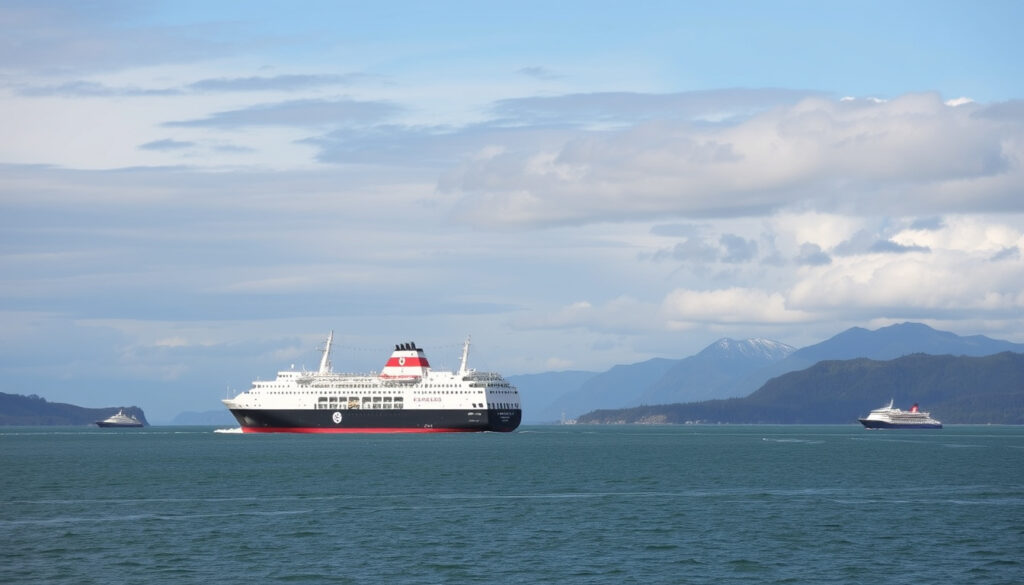
Yes. The Queen Charlotte Sound approach to Picton is one of New Zealand’s most beautiful coastal transits. Many passengers choose the ferry specifically for the views.
When does the ferry become a better option than the tunnel or driving?
Driving the full length of the South Island to Picton is possible, but for most, the ferry is faster and more relaxing. A proposed Cook Strait tunnel remains speculative — no project is confirmed. For now, the ferry is the only game in town for vehicle crossing.
For travellers, the ferry is worth it because it solves a logistical puzzle that no other mode does. The scenic payoff is a bonus, not the primary reason.
The pattern: the ferry’s value lies in its unique role, not just the view.
What is the Picton to Wellington ferry timetable?
Both operators run multiple daily sailings, typically 4–8 per direction depending on season. Interislander’s winter timetable lists four sailings each day: two in the morning and two in the afternoon/evening (Interislander Ferry timetable). Bluebridge’s timetable is valid from 1 November 2025 to 30 April 2026 and then again from 1 November 2026 to 30 April 2027 (Bluebridge Ferry Timetable).
How many sailings are there each day?
In winter, Interislander runs 4 sailings per direction; Bluebridge publishes its schedule seasonally, with up to 5 on its peak timetable.
What is the earliest and latest departure?
First sailings around 6 AM, last around 8 PM in summer. Winter finishes earlier — Interislander’s latest winter departure from Wellington is 3:30 pm.
How far in advance should I book?
For vehicle space, book 2–4 weeks ahead, especially in summer. Foot passengers can book days before, but online discounts are only available with advance purchase.
Comparison: Interislander vs Bluebridge
Three key differences define the choice.
| Feature | Interislander | Bluebridge |
|---|---|---|
| Ships | Kaitaki, Aratere, Kaiarahi | Straitsman, Connemara |
| Daily sailings (winter) | 3–4 | Up to 5 |
| Adult walk‑on fare (winter) | From $50 | From ~$80 (tier‑3 estimate) |
| Loyalty program | Interislander Club | Bluebridge Rewards |
| Check‑in time | 60 minutes | 60 minutes |
Pros and cons of taking the ferry
Upsides
- Only direct vehicle link between North and South Islands
- Scenic Marlborough Sounds views
- Competitive walk‑on fares from $50
- Onboard amenities (café, lounges, cinema)
Downsides
- Weather can cause delays or cancellations
- Vehicle fares add $100–$200
- Booking ahead required for best price
- No bridge or tunnel alternative
Confirmed facts vs what’s unclear
Confirmed facts
- Both operators sail daily between Picton and Wellington.
- Crossing time is 3–3.5 hours under normal conditions.
- Vehicle transport is available on all sailings.
What’s unclear
- Exact cheapest day varies by season and operator promotions.
- Future ferry tunnel plans are speculative – no confirmed project.
What passengers are saying
We are the original Cook Strait Ferry.
— Interislander official website
50 crossings per week.
— Bluebridge official website
tia.org.nz, directferries.com, mandolin-leopard-kflc.squarespace.com, 12go.asia, youtube.com, facebook.com, interislander.co.nz, bluebridge.co.nz
For those traveling in the opposite direction, the ferry from Wellington to Picton offers the same crossing with comparable schedules and pricing.
Frequently asked questions
Can I walk onto the Picton to Wellington ferry without a car?
Yes. Both operators accept foot passengers. Check‑in is at the terminal 60 minutes before departure. Interislander provides a shuttle from Wellington Railway Station.
Are there sleeping cabins on the ferries?
No. Both are day ferries with seating, lounges, and recliner chairs. No overnight cabins.
Can I bring a pet on board?
Yes, with restrictions. Pets must be in carriers and are not allowed in passenger lounges. Bluebridge offers a dedicated pet area. Check each operator’s policy.
What food and drink are available in the café?
Both have cafés serving hot meals, snacks, and beverages. Interislander also has a bar on some ships.
Is there Wi‑Fi on the ferries?
Limited Wi‑Fi is available on Interislander ships (paid). Bluebridge does not offer free Wi‑Fi. Signal on Cook Strait is patchy.
What happens if my sailing is cancelled due to weather?
Both operators rebook or refund affected passengers. Travel insurance is recommended for planned connections.
Do seniors or students get discounts?
Some concessions exist. Interislander defines adults as 15–64; children 2–14; infants free. Seniors (65+) may qualify for reduced fares – check directly.
Summary
The Picton to Wellington ferry remains the backbone of Cook Strait travel, offering a practical and scenic link. For budget travelers, Interislander’s winter Saver fares are the cheapest option; for frequent crossers, Bluebridge’s higher sail frequency and rewards program make it the smarter choice. For onward travel, check our guide on Flights Queenstown to Auckland. For New Zealand travellers, the decision comes down to one trade-off: pay less with Interislander and plan ahead, or enjoy more flexibility with Bluebridge and accept a higher base fare.
More related posts
 Knock Knock Jokes for Adults – Dirty, Flirty and Clean
 Where to Learn Languages for Free: Best Apps & Sites
 Grow a Garden Code May 2026: Free Seed , Pet & Reward
 How to Keep Your Number on Skinny: 4 Easy Steps
 ANZ Australia Receiving Money From Overseas – Process Explained
 NexGard Spectra for Cats: Dosage, Side Effects, and FAQ
 600 USD to NZD: Exchange Rate and Conversion Guide
 Christopher Mintz-Plasse: Biography, Age, Net Worth
