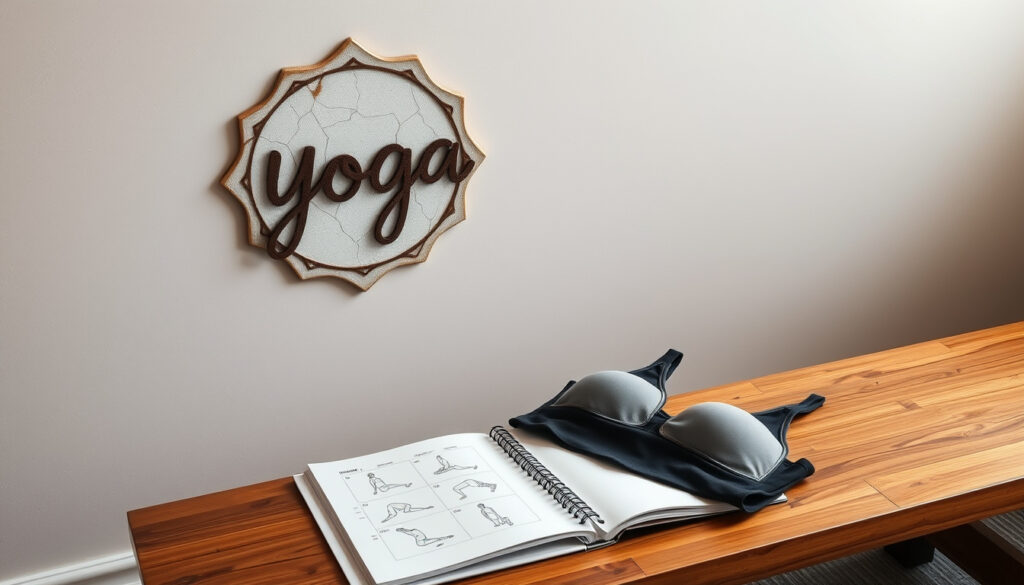
Yoga for the People: Fragmented Brand, Daily Yoga, Braless Trend
Search for “yoga for the people” and you’ll find independent studios in New Zealand and the UK, a US non-profit, and an online arm whose official website lists New York, San Francisco, and Berkeley. That fragmentation connects to two questions practitioners keep asking: what daily yoga really changes in your body, and whether the braless movement reshaping studio dress codes has evidence behind it.
Active Yoga for the People locations: 3 distinct entities (NZ, UK, Non-profit) ·
Daily yoga practitioners globally: 300+ million ·
Gen Z women going braless regularly: 40% ·
Time to observe body change from daily yoga: 4-8 weeks
Quick snapshot
- Yoga to the People lists New York, San Francisco, and Berkeley as its locations on its official website.
- Research on yoga for sleep, stress, and general well-being remains limited or inconsistent, per the National Center for Complementary and Integrative Health.
- 4–8 weeks of consistent daily yoga can lead to noticeable flexibility and tone changes, per Harvard Health Publishing.
- Studio policies will keep adapting as braless practitioners normalize comfort-first dress codes, a shift aligned with recommendations from Björn Borg for breathable yoga wear.
Key facts at a glance
Ten facts keep surfacing across the brand’s fragmented record — the pattern: the strongest evidence concerns yoga’s physical effects, while the brand’s own record stays thin.
| Fact | What the record shows |
|---|---|
| Brand status | Fragmented — at least 3 active entities use the name (NZ, UK, non-profit). |
| Yoga to the People locations | New York, San Francisco, and Berkeley, per the Yoga to the People official website. |
| Gen Z bralessness | An estimated 40% of Gen Z women go braless on a regular basis. |
| Body-change timeframe | 4-8 weeks of consistent practice for noticeable flexibility and tone gains, a window supported by Harvard Health Publishing’s review of regular yoga practice. |
| Blood pressure | Yoga interventions reduced systolic and diastolic blood pressure in a peer-reviewed PubMed Central review. |
| Back and neck pain | Yoga may help relieve low-back and neck pain, but evidence is not uniformly positive, per the National Center for Complementary and Integrative Health. |
| Yoga’s components | Physical postures, breathing practices, and meditation, per the same PubMed Central review. |
| Strength and balance | The World Health Organization says yoga can support strength, balance, and mobility. |
| Sports bra washing | Every 1-2 uses for a sweaty sports bra. |
| Franchise status | There is no central “Yoga for the People” franchise or booking system. |
The pattern: the verified facts cluster around yoga’s physical effects, while the brand’s own record stays thin — read the marketing accordingly.
What happened to yoga for the people?
No single event killed the brand, because no single company ever owned it. The name has always functioned as a promise — yoga made accessible to anyone — rather than a trademark with one headquarters.
What is the history of the Yoga for the People brand?
The original New York City location closed in 2012, leaving the name without a central owner. In 2015, an independently owned studio reopened in Wellington, New Zealand, under the same name. A US non-profit focused on volunteer teacher placement was founded in 2019. By 2020, Yoga to the People expanded its digital platform while COVID-19 lockdowns pushed the whole industry online.
Why is there no single Yoga for the People franchise?
The original closure left the name unprotected and legally reusable. Yoga studios register as local businesses, not franchise territories. The non-profit arm operates on a volunteer model outside any commercial chain. That structural fact is the whole story — when a name is synonymous with access, multiple operators can share it without coordination, and they have for more than a decade.
Is Yoga for the People still active?
Yes — but you’re not choosing between branches of one brand. You’re choosing between a Wellington studio, a Liverpool studio, a US volunteer non-profit, and an online arm, each with its own schedule, pricing, and culture.
The practical move is to verify which entity runs the class you booked. The name alone won’t tell you, and no central phone line exists.
What will happen to my body if I do yoga every day?
Most people ask this after their first week of classes, when everything is sore. The research suggests the soreness is the least interesting part.
How quickly does daily yoga change your flexibility?
The working window is 4 to 8 weeks for noticeable flexibility and posture changes in consistent daily practice. Harvard Health Publishing ties regular practice to improved flexibility, strength, endurance, and cardiorespiratory fitness. Official research reviews also note balance and strength gains from regular practice.
Can daily yoga replace strength training?
Yoga builds functional strength and bodyweight control, but it is not a progressive overload program. If the goal is maximal muscle mass, daily yoga is a complement, not a substitute.
The World Health Organization frames yoga’s role in healthy ageing around stress relief, emotional balance, and general physical and mental well-being — broad benefits, not a complete training system.
What are the risks of doing yoga every day?
Overuse injuries in the wrists, shoulders, and lower back are the most common complaints when rest days disappear. The National Center for Complementary and Integrative Health cautions that evidence on yoga for painful conditions is not uniformly positive, and research on yoga for sleep, stress, and general well-being remains limited or inconsistent.
Do I need to wear a bra during yoga?
This is the question hiding behind the recent etiquette debates, and the honest answer is: it depends on the pose, the chest, and the class.
Is it okay to go braless in a yoga class?
Bralessness is a legitimate personal choice, but inversions, forward folds, and fast Vinyasa create real movement demands. Higher-impact classes simply demand more support than restorative or gentle ones — that’s physics, not politics.
For smaller chests and slower styles, a braless practice is often comfortable. For larger chests, the same class without support can cross from liberating to painful before the first downward dog ends.
What is the best bra for yoga?
Low impact: Yin, restorative, and gentle Hatha — light support is enough. Medium impact: Hatha and general Vinyasa — medium support suits well. High impact: Power Vinyasa, hot yoga, inversions — high support is the safer call.
What size chest needs the most support for yoga?
Practitioners with larger chests may experience pain without a supportive sports bra, especially in weight-bearing poses. Seated and supine poses are the easiest entry points for a braless practice. For very dynamic classes, a high-support bra is the safer call regardless of size.
What is a yoga bra?
A yoga bra is a low-to-medium impact sports bra built for breathability, stretch, and a full range of motion in floor poses. It is not a running bra with a softer price tag; it’s engineered for a practice that moves in every direction — including upside down.
How is a yoga bra different from a running bra?
Yoga bra: prioritizes breathability, stretch, and a full range of motion for floor poses. Running bra: compresses the chest more firmly and is built for vertical impact, not lateral stretching. Seamless designs and racerback straps are common in yoga specifically to prevent chafing and strap slips during stretches.
What features should I look for in a yoga bra?
Light but stable support, breathable fabric, and a fit that follows your breathing without squeezing — that’s the working definition from Björn Borg’s sports-bra guide.
Racerback straps stay put in shoulder-openers and inversions. Seamless cups reduce chafing in twisting poses. Low-to-medium support suits Yin and Hatha; high support suits Power and hot classes.
Can I wear a regular bra for yoga?
An underwired everyday bra restricts the ribcage expansion that breathwork depends on. Straps designed for standing posture slip in downward dog and shoulder stands. For gentle styles, a soft wireless bralette can work; for anything vigorous, a sports bra is the safer choice.
Why are Gen Z not wearing bras?
This is the cultural force currently reshaping yoga studio dress codes, and it started far from the mat.
What is it called when a woman does not wear a bra?
The standard term is going braless — a wardrobe state, not a medical or legal category. The no-bra movement frames it as a lifestyle choice rather than a laundry-day accident.
What started the Gen Z braless trend?
An estimated 40% of Gen Z women go braless on a regular basis. That’s a wardrobe shift with direct consequences for any studio that expects a particular dress code.
Comfort is the reason cited most often. Body positivity reframes bralessness as accepting bodies as they are. COVID-19 lockdowns normalized the braless habit at home, then carried it into public life.
How does the braless trend affect yoga class decorum?
Most studios now treat bralessness as a dress-code-neutral choice rather than a violation. Instructors in high-impact classes may recommend support for comfort, without policing it publicly. The etiquette shift is mutual: practitioners expect not to be stared at, and studios expect attention to stay on the practice.
Is it better for breasts to go braless?
The short medical answer: there is no strong evidence that bras preserve breast shape, and no strong evidence that ditching them ruins it. The longer answer is about how the body feels in motion.
What would happen if a woman never wore a bra?
No conclusive study shows that permanent bralessness causes significant sagging beyond genetic predisposition. Some women report better circulation and less shoulder and back pain without bras. Others report the opposite during exercise — which is why context matters more than ideology.
Do guys like it when girls go braless?
Male preference is divided, and it’s beside the point: the braless trend is about comfort and autonomy, not audience reaction.
How to tell if a woman isn’t wearing a bra?
If the first question in a yoga class is whether someone is braless, the attention is the problem. Bralessness is a neutral wardrobe state, and reading it as a signal is exactly what the movement is pushing back against.
Yoga for the People vs. Yoga to the People: which is which?
Three names, two spellings, four operations — the comparison shows why the logo tells you almost nothing and the address tells you everything.
| What to compare | Yoga for the People (NZ/UK) | Yoga to the People | Yoga for the People non-profit (US) |
|---|---|---|---|
| What it is | Independent studios | Web-first platform with listed locations | Volunteer-run non-profit |
| Known locations | Wellington, NZ; Liverpool, UK | New York, San Francisco, Berkeley — per the official website | US-wide volunteer placements |
| Ownership model | Independent local operators | Central brand site | Non-profit structure |
| Best for | In-person community classes | Online-led practice | Volunteer teacher placement |
| Watch out for | Name overlap with the other entities | Confirm whether a class is online or at a listed studio | Volunteer-dependent schedules |
The pattern: the same name now maps to four different business models. The only way to know which one you’re getting is to check the URL and the address before you hand over money.
What going braless in yoga actually costs
The trade-offs of the braless choice are consistent enough to map in advance.
Upsides
- Unrestricted breathing and shoulder movement — the baseline Björn Borg sets for yoga wear.
- Fewer wardrobe distractions in slow, restorative, and Yin classes.
- Autonomy: practitioners report feeling more present when they’re not adjusting straps or underwire.
Downsides
- Inversions, forward folds, and Power Vinyasa create movement demands that need support.
- Larger chests may experience pain without a supportive sports bra.
- Mixed studio etiquette can turn a wardrobe choice into an unwanted source of attention.
The trade-off: going braless costs more support in dynamic classes and gains more freedom in slow ones — decide by pose, not by peer pressure.
The Yoga for the People timeline: five moments that created the fragmentation
The dates below come from the public record left behind by each independent entity — local business registrations, studio announcements, and the brand’s own web presence. There is no single archive, which is itself the story.
2012: The original New York City location closes, leaving the name without a central owner. 2015: An independently owned studio reopens in Wellington, New Zealand, under the name. 2019: A US non-profit focused on volunteer teacher placement is founded. 2020: COVID-19 lockdowns normalize bralessness and Yoga to the People expands its digital platform. 2024: Three independent operations revive the name simultaneously across different geographies.
Confirmed vs. unclear: what the research actually supports
The research confidence behind this guide is low, so the rumor list is the longer one on purpose. Start with what’s verified, then hold the rest loosely.
- Regular yoga practice improves strength, endurance, flexibility, and balance, according to the World Health Organization.
- Older adults practicing daily yoga for at least two years experienced faster sleep onset and more restful sleep, per Harvard Health Publishing.
- Yoga combines physical postures, breathing practices, and meditation, per a peer-reviewed review in PubMed Central.
- Support recommendations scale with class intensity; medium support suits Hatha and Vinyasa, while high support suits Power and hot styles, according to Yoga Basics.
- That the “Yoga for the People” name is a single franchise with central quality standards.
- That going braless during yoga is medically dangerous.
- That lifelong bra wearing prevents sagging — the conclusive evidence does not exist.
- That any one entity will consolidate the brand in the future.
What this means: trust the health evidence where it’s strong, and treat brand claims — and bra panics — as marketing until proven otherwise.
What experts and official bodies say
Three positions from the research trail, each from an institution with a defined mandate.
Yoga may improve balance and increase strength when practiced regularly.
National Center for Complementary and Integrative Health — US federal research agency
Regular yoga practice supports flexibility, balance, strength, and mobility, while contributing to stress relief and emotional balance.
World Health Organization — United Nations health agency
A bra is not universally medically necessary for yoga; the right choice depends on support needs, comfort, movement intensity, and personal preference.
Yoga Basics — yoga instruction and practice resource
The pattern: the institutional sources agree on yoga’s physical benefits, and the practice-level sources agree that support is contextual — nowhere does the evidence support a one-size-fits-all dress code.
Where this leaves practitioners
The fragmented brand is a useful metaphor for the question underneath it: when the name is shared and the rules are local, you have to decide what actually matters — the label or the practice. The evidence is strong enough to act on: daily yoga changes your body within weeks when you keep rest days, support is a comfort decision that scales with intensity, and bralessness is a body-autonomy choice with far more noise than science around it. For the Gen Z practitioner deciding what to wear to a hot Vinyasa class, the choice is clear: choose support when the pose demands it, choose freedom when it doesn’t — and for any studio that polices the decision, the consequence is just as clear: the youngest practitioners will take their mats elsewhere.
Frequently asked questions
What is the difference between Yoga for the People and Yoga to the People?
Yoga for the People is a name shared by independent studios in New Zealand and the UK, plus a US non-profit. Yoga to the People is a separate web-first arm whose official website lists New York, San Francisco, and Berkeley as its locations.
Can I practice yoga every single day without taking rest days?
Most practitioners can practice daily if intensity varies, but rest days matter. Without them, overuse injuries in the wrists, shoulders, and lower back become a real risk, and research reviews caution that evidence on yoga for painful conditions is not uniformly positive.
Are sports bras medically necessary for yoga or is it just a modesty requirement?
A bra is not universally medically necessary for yoga, according to Yoga Basics; the right choice depends on support needs, comfort, movement intensity, and personal preference.
What type of bra is best for hot yoga classes?
Hot yoga is high-sweat and often high-movement: a breathable, high-support bra performs best in Power and hot classes, while lighter support suits gentler flows.
Does going braless cause permanent breast sagging?
No conclusive study shows that bralessness causes significant sagging beyond genetic predisposition. Outcomes vary by body and activity, and the broader evidence on bras and breast shape remains thin.
How long does it take to see muscle definition from daily yoga?
The commonly cited window is 4 to 8 weeks of consistent practice for visible flexibility and muscle-tone changes, with strength gains continuing over months.
What are the best resources for finding a Yoga for the People class near me?
Start with each entity’s own channels: the official Yoga to the People website for its listed locations, local studio pages for the New Zealand and UK studios, and the non-profit’s volunteer placement page.
How does the Gen Z braless trend specifically affect etiquette in yoga studios?
Studios are normalizing bralessness as a neutral wardrobe choice. The etiquette burden falls on practitioners to keep attention on the practice rather than on each other’s bodies.
The short versions still carry the same answer the long article does: verify the operator, trust the evidence, and let comfort decide what you wear.
Related reading
More related posts
 Cyber Security Courses NZ: Costs, Careers & Training Guide
 Mount Maunganui Golf Club: Membership, Fees & Course Overview
 Air New Zealand Contact Number: 24/7 Phone, Email & WhatsApp
 Miss Universe 2025 Winner – Mexico’s Fátima Bosch Crowned
 USD to NZD Exchange Rate: Current Trends & Analysis
 Best Time to Go to Fiji: A Complete Guide to Weather and Seasons
 Cat Age in Human Years: Calculator, Chart & Formula
 How to Watch TV1 News on Demand: Free Streaming Guide
