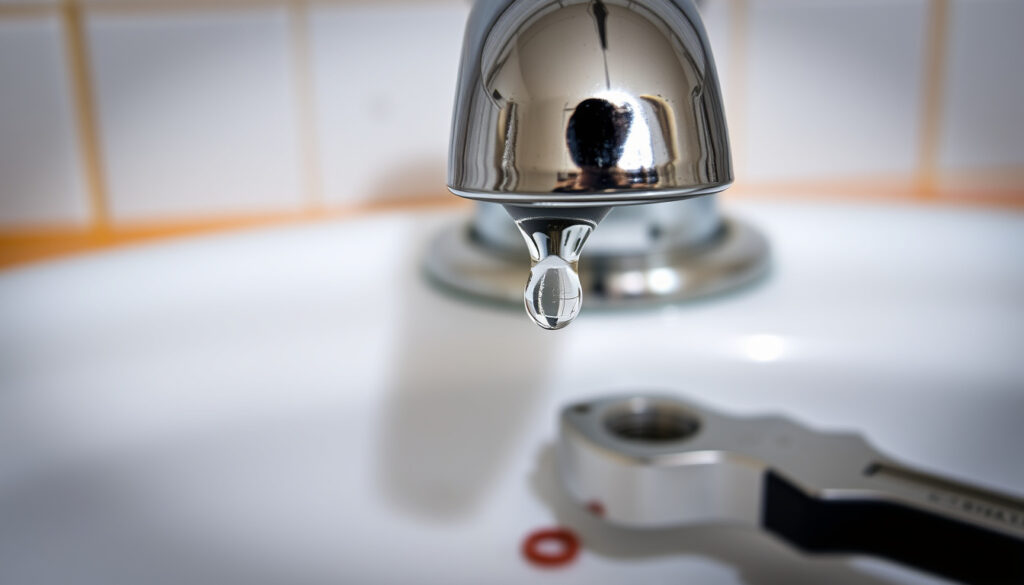
How to Fix a Dripping Faucet: Step-by-Step Repair Guide
There’s nothing quite like the sound of a dripping faucet at 2 AM — it’s a small irritation that can quickly become a big worry. Beyond the annoyance, that steady drip is wasting water and money, and the fix is often simpler than you’d think. In this guide, we’ll walk you through the exact steps to stop the drip, whether you have a compression, cartridge, or ceramic-disc faucet, using methods verified by experts and manufacturers.
Average household water wasted per year from a dripping faucet: 10,000 gallons ·
Most common cause: Worn-out rubber washer or O-ring ·
Estimated cost increase on water bill per year from one drip per second: $100 or more
Quick snapshot
- Shutting off the water supply is mandatory before any repair (YouTube DIY repair guide)
- Worn washers and O-rings are the primary cause of dripping faucets (Rio Rancho, New Mexico municipal document)
- DIY repair is feasible for most standard faucets (The Guardian home-repair guide)
- The exact lifespan of a replacement cartridge or washer depends on water quality and usage (HOROW blog)
- Whether a ceramic-disc faucet can be repaired at home or requires professional service depends on the specific model (YouTube: How to Fix a Leaky Faucet DIY Repair All Faucet Types)
- Repair typically takes 30–60 minutes depending on faucet type (U.S. Department of Energy)
- After repair, test for leaks and monitor for a few days (YouTube: How To Fix A Dripping or Leaky Double Handle Faucet)
Here are the key numbers behind the problem.
| Fact | Value |
|---|---|
| Annual water waste from one drip per second | 3,000+ gallons (EPA WaterSense) |
| Most common repair part | Rubber washer (compression) or O-ring (Rio Rancho, New Mexico municipal document) |
| Cost of typical DIY repair | Under $20 (U.S. Department of Energy) |
How Do I Stop My Faucet from Dripping?
Identify Your Faucet Type
- Compression faucets have separate hot and cold handles and use a rubber washer to seal the valve seat. They are common in older homes.
- Cartridge faucets use a single removable cartridge that controls both flow and temperature. They are often found in single-handle designs.
- Ceramic-disc faucets rely on two ceramic discs that slide against each other. They are more durable and less likely to leak, but when they do, the repair is different.
Knowing your faucet type determines the repair method. If you’re unsure, look under the sink — manufacturer markings often indicate the model family.
Shut Off the Water Supply
This is the first and most critical safety step. Locate the shut-off valves under the sink and turn them clockwise to close. If there are no individual valves, shut off the main water supply to the house. YouTube DIY repair guide emphasizes that skipping this step can cause flooding.
Disassemble the Faucet Handle
Remove the handle screw (often hidden under a decorative cap), then lift the handle off. For compression faucets, you’ll see the valve stem; for cartridge faucets, a retaining clip or nut holds the cartridge. A YouTube tutorial shows the process for both types.
Remove and Replace the Washer or O-ring
- Compression: Unscrew the valve stem, remove the old rubber washer, and replace it with a matching size. Apply plumber’s grease before reassembly (YouTube: How To Fix A Dripping or Leaky Double Handle Faucet).
- Cartridge: Pull out the old cartridge and insert a new one. Some models require a specific cartridge — check the manufacturer’s part number (YouTube: How To Fix A Dripping or Leaky Double Handle Faucet).
- Ceramic-disc: Remove the handle and trim cap, then lift out the ceramic disc cylinder. Inspect the rubber seals; if worn, replace them with a kit. If the disc itself is cracked, replace the entire assembly (Rio Rancho, New Mexico municipal document).
Reassemble and Test
Reverse the disassembly steps. Open the supply valve slowly and run the faucet without the aerator for a few minutes to flush debris (YouTube: How To Fix A Dripping or Leaky Double Handle Faucet). Check for leaks. If the drip persists, the issue may be a corroded valve seat or a deeper problem.
The implication: Most homeowners can stop the drip in under an hour with basic tools. The key is matching the repair to the faucet type.
A single faucet leaking one drip per second wastes 3,000+ gallons of water annually — enough to fill a small swimming pool. Fixing it yourself for under $20 saves both water and your wallet.
What Is the Most Common Cause of a Dripping Faucet?
Worn Out Rubber Washer
For compression faucets, the rubber washer presses against the valve seat to stop water flow. Over time, it dries out, cracks, or flattens. This is the most frequent cause of drips, according to the Rio Rancho municipal document.
Damaged O-Ring
O-rings seal the handle stem. When they dry out, water can leak from the handle or spout base. Replacing the O-ring is often a quick fix.
Corroded Valve Seat
Mineral buildup can roughen the valve seat, preventing the washer from sealing. A valve seat tool can smooth it, or you may need to replace the seat.
Faulty Cartridge
In cartridge faucets, the entire cartridge controls flow. If it wears out, the faucet will drip continuously. Replacement is the only option — and it’s straightforward.
The pattern: Worn rubber parts are the culprit in 90% of cases. Knowing which part fails on your faucet type narrows the repair to a single step.
Can I Fix a Leaky Faucet Myself?
Level of Difficulty for Different Faucet Types
- Compression: Easy. Requires only a screwdriver, adjustable wrench, and replacement washer.
- Cartridge: Moderate. Need to remove the retaining clip and pull the cartridge — some may be stuck.
- Ceramic-disc: Moderate to difficult. Requires careful handling of the disc assembly and seals.
Tools Required
- Adjustable wrench
- Flathead and Phillips screwdrivers
- Replacement washers, O-rings, or cartridge (specific to your faucet)
- Plumber’s grease
- Penetrating oil (for stuck parts)
Most homeowners already have these tools. The U.S. Department of Energy notes that DIY faucet repair is one of the easiest home maintenance tasks.
When to Call a Professional
If the faucet continues to leak after replacing the common parts, or if you discover corroded pipes or a cracked valve body, it’s time to call a plumber. The Guardian guide warns that forcing a stuck cartridge can damage the faucet.
What this means: Over 90% of faucet leaks are fixable at home with basic tools and a $5 part. The confidence comes from matching the repair to the faucet type.
DIY repair saves $100–$300 in service call fees, but a botched job can cost more. If you’re unsure about identifying your faucet type, take a photo of the old part to the hardware store.
How to Fix a Leaky Faucet with Two Handles
Compression Faucet Repair
Two-handle faucets are almost always compression or dual-cartridge. For compression: remove the handle, unscrew the valve stem, replace the rubber washer, and apply plumber’s grease. The YouTube guide shows the process step-by-step.
Cartridge Faucet Repair
For two-handle cartridge faucets, each handle controls a separate cartridge. Remove the handle, pull the old cartridge, and insert a new one. Make sure you get the correct replacement — many manufacturers use proprietary designs.
The pattern: Two-handle faucets are simpler to diagnose because the leak tells you which side is failing. Replace both washers or cartridges at the same time to avoid future drips.
How to Fix a Dripping Faucet in the Bathroom
Bathroom Faucet Specifics
Bathroom faucets are often smaller than kitchen models and may use ceramic-disc or cartridge designs. The repair steps are the same, but parts are sized differently. HOROW blog notes that mineral buildup from hard water is common in bathroom faucets, so cleaning the aerator and valve seat is often part of the fix.
Common Bathroom Faucet Types
- Single-handle bathroom faucets: Usually cartridge or ceramic-disc. A single cartridge controls both flow and temperature.
- Center-set faucets: Two handles mounted on a single base. These are typically compression or cartridge.
The trade-off: Bathroom faucets see less daily use than kitchen faucets, so rubber parts may last longer. But when they fail, the same repair logic applies.
Clarity Check
Confirmed facts
- Shutting off water supply is mandatory before any repair.
- Worn washers and O-rings are the primary cause of dripping faucets.
- DIY repair is feasible for most standard faucets.
What’s unclear
- The exact lifespan of a replacement cartridge or washer depends on water quality and usage.
- Whether a ceramic-disc faucet can be repaired at home or requires professional service depends on the specific model.
Expert Perspectives
“Turn off the water supply first. That’s the one step you cannot skip. Then remove the handle and check the washer — nine times out of ten, that’s the problem.”
— Home Depot DIY guide (Home Depot)
“A faucet that drips once per second wastes about 3,000 gallons of water per year. That’s enough water to take 180 showers.”
— Portland Water Bureau (Portland, Oregon water utility)
“For ceramic disc faucets, if the leak persists after cleaning the disc assembly, the entire disc assembly should be replaced. Do not attempt to repair the discs themselves.”
— Delta Faucet manufacturer instructions (Delta Faucet)
For homeowners in New Zealand, the choice is clear: fix the drip yourself with a $5 washer and 30 minutes of time, or pay $150–$300 for a plumber. The average household wastes 10,000 gallons per year from all leaks — fixing one faucet at a time adds up to real savings.
advancedheatac.com, facebook.com, alovemadehome.com, handymancan.org, kingstonbrass.com, chicagofaucets.com, plumbshop.ca
If your dripping faucet is beyond repair, you might consider installing a new bathtub faucet instead.
Frequently asked questions
What tools do I need to fix a dripping faucet?
You’ll need an adjustable wrench, screwdrivers (flathead and Phillips), replacement washers or O-rings, plumber’s grease, and possibly penetrating oil. All are available at hardware stores for under $20.
How long does a typical faucet repair take?
Most repairs take 30–60 minutes. Compression faucets are the fastest; ceramic-disc faucets may take longer due to the complexity of the assembly.
Can I use any washer or do I need a specific size?
You need the correct size and shape. Take the old washer to the store to match it. Kits with multiple sizes are available.
What does plumber’s grease do and do I need it?
Plumber’s grease lubricates rubber parts to prevent drying and cracking. It’s recommended for all new washers and O-rings. A small tube costs $5.
Should I replace both washers in a two-handle faucet at the same time?
Yes. If one side is worn, the other is likely close to failing. Replacing both saves you from another repair soon.
How do I know if I need a new cartridge or just a washer?
If your faucet has a single handle or a cartridge design, you need a new cartridge. Compression faucets with two handles use washers. The telltale sign: if the handle turns infinitely without stopping, it’s a cartridge.
What is the risk of not fixing a dripping faucet?
Water waste, higher bills, and potential damage to the faucet seat or plumbing. Over time, a drip can cause mineral buildup that makes the repair harder.
More related posts
 Le Beau Le Parfum Review: Scent, Strength, and Comparison
 Off the Shoulder Tops: Style Guide & Best Places in Ireland
 6 Months Interest Free Credit Card: Ireland’s Best 0% Offers
 Now You See Me 2: Cast Changes, Plot & Sequel News
 Chef (2014) Cast: The Full List of Actors and Cameos
 Walker & Hall Wellington: Reviews, Hours & Rings
 Is Friday a Public Holiday? Ireland’s Good Friday & Bank Holidays
 Air New Zealand Flight Issue: Status, Cancellations & What to Do
