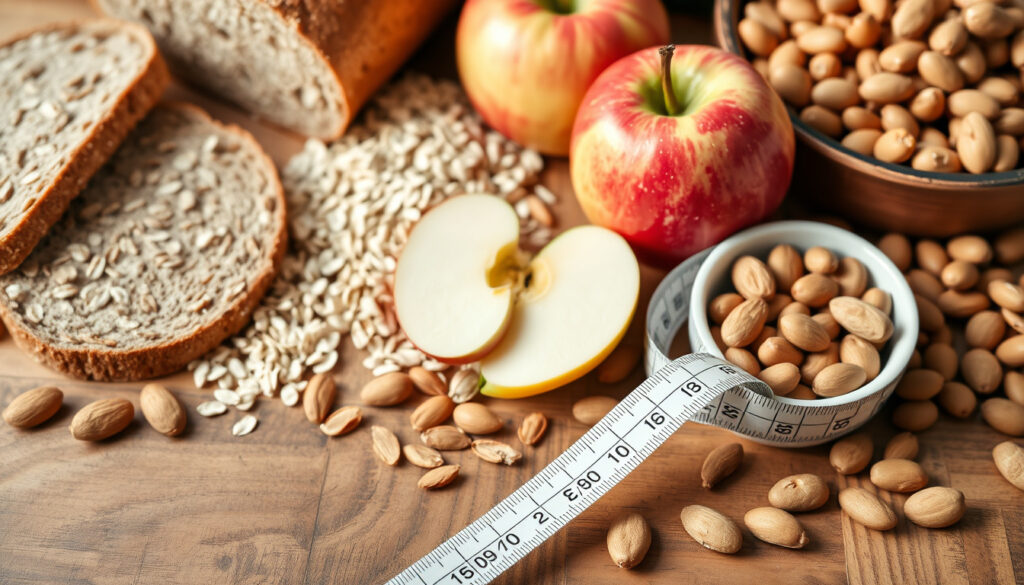
How Much Fibre Per Day? UK & US Guidelines
If you’ve ever stared at a bowl of Weetabix and wondered whether it’s enough to meet your daily fibre needs, you’re not alone. Official guidelines from the NHS (UK national health authority) recommend 30 grams per day, yet the average UK adult gets just 17 grams.
UK Recommendation: 30 g per day · US Recommendation (Women <50): 25 g per day · US Recommendation (Men <50): 38 g per day · Average UK Adult Intake: 17 g per day · Fiber in 2 Weetabix: 3.6 g
Quick snapshot
- UK adults should eat 30g of fibre per day (NHS)
- US women under 50 need 25g per day (MedlinePlus)
- US men under 50 need 38g per day (MedlinePlus)
- A diet high in fibre lowers risk of heart disease and bowel cancer (NHS)
- The exact mechanism for weight loss via fibre is complex and varies by individual (Mayo Clinic)
- Whether very high intakes (>50g) provide additional benefits is debated (PubMed)
- The optimal fibre intake for gut microbiome diversity is still being investigated (PubMed)
- The UK’s 30g/day target was set after the Scientific Advisory Committee on Nutrition (SACN) review in 2015 (UK Government)
- Choose whole grains over refined (NHS)
- Add legumes to meals (National Cancer Institute)
- Eat fruits and vegetables with the skin (National Cancer Institute)
- Snack on nuts and seeds (Harvard Health)
Five key data points sum up the current state of fibre intake recommendations and actual consumption.
| Fact | Value |
|---|---|
| UK Adult Goal | 30 g per day (NHS) |
| US Goal (Women <50) | 25 g per day (MedlinePlus) |
| US Goal (Men <50) | 38 g per day (MedlinePlus) |
| Average Intake (UK) | 17 g per day (British Heart Foundation) |
| Fiber in Weetabix (2) | 3.6 g (Weetabix) |
| Fiber in a medium banana | 3.1 g (USDA FoodData Central) |
| Fiber in a medium apple (with skin) | 4.4 g (USDA FoodData Central) |
| Fiber in chia seeds (1 tbsp) | 4.1 g (Harvard Health) |
| Fiber in cooked lentils (1 cup) | 15.6 g |
| Fiber in raspberries (1 cup) | 8.0 g |
Most adults are missing the mark by a wide margin. The UK average of 17g is barely half the recommended 30g, and 9 in 10 American women fail to meet their 25g target. That’s not a failure of willpower—it’s a gap that built-in food habits can close.
How much fibre per day do you need?
How much fibre per day for a woman?
- US women under 50: 25 g per day (MedlinePlus (US National Library of Medicine))
- US women over 50: 21 g per day (MedlinePlus)
- UK women: same 30 g target as men overall (NHS)
How much fibre per day for a man?
- US men under 50: 38 g per day (MedlinePlus)
- US men over 50: 30 g per day (MedlinePlus)
- The UK guidance does not differentiate by sex—30g is the uniform target for all adults (NHS)
How much fiber per day to lose weight?
There’s no separate fibre target for weight loss, but high-fibre foods are naturally filling and often lower in calories. The Mayo Clinic (leading US medical centre) emphasises that fibre slows digestion, helping you feel satisfied longer. Hitting the standard age/sex recommendations is a solid start for weight management.
What this means: The US uses a tiered system tied to calorie needs, while the UK sets one target for everyone. Either way, the threshold is higher than most people realise.
How can I get 25g of fiber a day?
Fibre-rich breakfast options
- Oats with berries and seeds (approx 8g total) (Harvard Health)
- Whole-grain cereal like Weetabix (3.6g for 2 biscuits) plus a banana (3.1g) = 6.7g
- Bran flakes with milk (approx 5g per serving) (National Cancer Institute)
High-fibre lunch and dinner ideas
- Wholemeal sandwich with salad and legumes (approx 8g) (NHS)
- Lentil soup or bean chilli (15-20g per cup) (National Cancer Institute)
- Baked potato with skin and filling (approx 4g plus toppings) (NHS)
Easy ways to add fibre to snacks
- An apple with skin (4.4g) or a pear (5.5g)
- Handful of almonds or pumpkin seeds (approx 3g) (Harvard Health)
- Popcorn (3 cups air-popped = 3.5g) (National Cancer Institute)
The pattern: 25g is achievable with three fibre-focused meals and a couple of smart snacks. Swap one refined grain for a whole grain at each meal and add a fruit or legume side.
Simple steps to boost your fibre intake
- Start breakfast with a whole grain such as oats or a bran-based cereal.
- Add legumes like lentils, chickpeas, or black beans to your lunch or dinner.
- Keep the skin on fruits and vegetables.
- Snack on nuts, seeds, or popcorn instead of processed options.
- Increase fibre gradually over several days and drink plenty of water.
The implication: Small, repeatable swaps build the daily total without requiring a rigid meal plan.
What does 30g of fiber look like in a day?
A sample meal plan for 30g of fibre
- Breakfast: Oats with raspberries and chia seeds (8g) — (Harvard Health)
- Lunch: Wholemeal bread sandwich with avocado and salad (8g) — (NHS)
- Dinner: Lentil chilli with vegetables (12g) — (National Cancer Institute)
- Snack: Apple (4.4g)
How portions of common foods add up
Two Weetabix (3.6g) + a banana (3.1g) = 6.7g. That’s about 22% of a UK adult’s daily goal. Add a cup of cooked lentils at dinner (15.6g) and you’re already at 22.3g—just 8g short. A handful of pumpkin seeds (5.2g per ounce) closes the gap entirely (Harvard Health).
30g is not an abstract number. It’s roughly the fibre in a bowl of oatmeal with fruit, a lentil soup lunch, and a dinner including whole grains and vegetables. A single cup of cooked lentils covers half the target by itself.
The trade-off: 30g requires deliberate choices, but it doesn’t demand special foods. The same foods that give you fibre also deliver vitamins, minerals, and phytochemicals—there’s no downside to choosing them.
What food is the highest in fibre?
Top 10 high fibre foods
The table below ranks the most fibre-dense foods by serving size, from legumes to fruit.
| Food | Serving | Fibre (g) |
|---|---|---|
| Lentils, cooked | 1 cup | 15.6 |
| Chia seeds | 1 oz (2 tbsp) | 10.0 (Harvard Health) |
| Artichoke, cooked | 1 cup | 9.6 (Harvard Health) |
| Raspberries | 1 cup | 8.0 |
| Black beans, cooked | 1 cup | 15.0 |
| Bran cereal | 1 cup | 14.0 (National Cancer Institute) |
| Pumpkin seeds | 1 oz | 5.2 (Harvard Health) |
| Almonds | 1 oz (23 nuts) | 3.5 |
| Apple with skin | 1 medium | 4.4 |
| Weetabix (2 biscuits) | 2 biscuits | 3.6 (Weetabix) |
Soluble vs insoluble fibre sources
- Soluble (lowers cholesterol, stabilises blood sugar): oats, apples, beans, carrots, citrus fruits (Mayo Clinic)
- Insoluble (prevents constipation, adds bulk): whole wheat, nuts, cauliflower, potatoes with skin (Mayo Clinic)
The catch: Most plant foods contain both types, so a varied diet covers both needs naturally.
Is 2 Weetabix a day enough fibre?
How much fibre is in Weetabix?
Two Weetabix provide 3.6g of fibre—roughly 12% of the UK 30g target (Weetabix). Add a banana (3.1g) and you get 6.7g, still less than a quarter of the daily goal.
How does a banana compare?
A medium banana delivers 3.1g of fibre (USDA FoodData Central). That’s close to Weetabix but still modest. Neither food alone makes a dent in the recommendation.
Why variety in fibre sources matters
Relying on one or two sources means missing out on the range of beneficial compounds that come with different plant foods. The British Heart Foundation (UK heart health charity) recommends a mix of whole grains, fruits, vegetables, legumes, nuts, and seeds for optimal health.
The implication: A bowl of Weetabix is a fine start, but it’s only a start. Pair it with fruit, seeds, and later meals rich in legumes and vegetables to get to where you need to be.
Weetabix is marketed as a high-fibre cereal, yet two biscuits cover only 12% of the UK target. The real value comes from combining it with other fibre-heavy foods—not from eating more Weetabix.
Confirmed facts
- UK adults should eat 30g of fibre per day (NHS)
- US women under 50 need 25g per day (MedlinePlus)
- US men under 50 need 38g per day (MedlinePlus)
- High-fibre diet lowers risk of heart disease, stroke, type 2 diabetes, and bowel cancer (NHS)
What’s unclear
- How exactly fibre drives weight loss varies by individual (Mayo Clinic)
- Whether intakes above 50g offer extra benefit over recommended levels (PubMed)
- Long-term health impacts of Weetabix vs whole food bran sources are not heavily studied
- Optimal fibre intake for maximum gut microbiome diversity is still being investigated (PubMed)
- Whether soluble fibre reliably lowers cholesterol in all individuals is debated (Mayo Clinic)
- Whether insoluble fibre fully prevents constipation in every case is not conclusive (Mayo Clinic)
“In the UK, the government recommends adults eat 30g of fibre per day, but most of us fall short, averaging around 17g a day.”
“Our dietary fibre intake should increase to 30g a day.”
— NHS (UK national health authority)
“Current dietary guidelines for Americans suggests people age 2 and older get 14 grams of fiber for every 1,000 calories.”
— Mayo Clinic (US medical institution)
Related reading: Gluten Free Apple Crumble: Best Flours, Tips & Recipe · Tomato Soup Recipe NZ: Homemade Tips (Jamie Oliver & Ramsay)
healthline.com, webmd.com, health.clevelandclinic.org, healthline.com, bbcgoodfood.com, mskcc.org, goodrx.com
Frequently asked questions
Should you take a fibre supplement?
Supplements can help, but whole foods provide additional nutrients and benefits. The NHS advises getting fibre from food first.
Does fibre help with blood sugar control?
Yes. Soluble fibre slows carbohydrate absorption, which helps stabilise blood glucose (Mayo Clinic).
What is the best fruit for fibre?
Raspberries (8g/cup), pears (5.5g each), apples (4.4g each) and bananas (3.1g) are top choices (Harvard Health).
How much fibre does a child need?
The US guideline uses 14g per 1,000 calories, adjusted by age. For children 1-3 years: ~19g; 4-8 years: ~25g (Dietary Guidelines for Americans).
Is it better to get fibre from food or supplements?
Food first. Whole foods offer vitamins, minerals, and phytochemicals that supplements lack. Supplements are a backup, not a substitute (Mayo Clinic).
What are the signs of a low-fibre diet?
Constipation, irregular bowel movements, high cholesterol, and blood sugar spikes. The NHS notes that long-term low intake raises the risk of bowel cancer and heart disease.
For a person aiming to reach 30g per day, the choice is clear: start with whole grains at breakfast, add legumes at lunch or dinner, and snack on fruits and nuts. That’s the pattern that closes the gap. Anything less, and the health consequences—higher heart disease risk, poorer digestive health—are real and cumulative.
More related posts
 Main Street Fish and Chips: Menu, Prices & Reviews
 Abel Tasman National Park: Visitor Guide
 ANZ Fixed Term Deposit Rates 2025: Current Rates & Comparison
 Pak n Save Upper Hutt: Hours, Specials, Online Shopping
 Samsung Galaxy Z Flip 7 FE: Specs, Price and More
 Iron Lung Box Office: Hit or Flop? Budget & Gross Compared
 600 USD to NZD: Exchange Rate and Conversion Guide
 Polo Ralph Lauren NZ: Stores, Sales, Perfume & Caps
