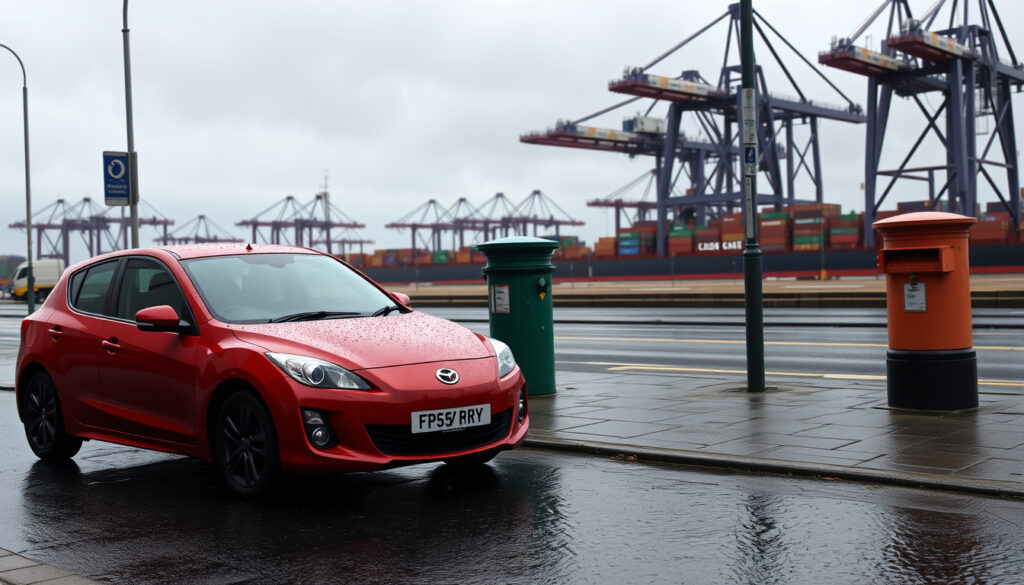
Import Cars from Japan to Ireland: Costs, Rules & Is It Worth It
You’ve seen the listings: a 2019 Toyota Land Cruiser with 40,000 km for €12,000 — a tempting deal compared to the €18,000 you’d pay at a local dealer. But the real price tag includes more than the auction fee.
Customs duty on used cars from Japan: 10% ·
VAT on imported used cars: 21% ·
Vehicle Registration Tax (VRT) range: 14% to 36% based on CO₂ emissions ·
Minimum age of imported Japanese cars: 3 years (due to Japan’s Shaken inspection cycle) ·
Typical shipping cost from Japan to Ireland: €1,500–€3,000 ·
Popular Japanese import brands in Ireland: Toyota, Honda, Nissan, Mazda
Quick snapshot
- Customs duty of 10% on used cars from non-EU countries (including Japan) (VRT.ie (Irish car import guide))
- VAT of 21% on imported used cars (ODO.ie (independent VRT guide))
- VRT calculated based on CO₂ emissions and market value; rates published by Revenue (Citizens Information (official Irish guidance))
- Exact insurance premium difference varies by provider and driver profile (Reddit (community discussion))
- Long-term reliability of Japanese imports vs Irish-supplied models in Ireland’s climate (Reddit (community discussion))
- Actual savings after all taxes may be smaller than advertised (VRT Japan (specialist guide))
- Cars exported from Japan are typically 3–5 years old due to the Shaken inspection system — exact age varies by model and seller (Reddit (community discussion))
- Shipping from Japan to Dublin or Cork: 4–8 weeks (Nobuko Japan (import guide))
- VRT appointment must be made within 7 days of arrival (Citizens Information)
- NCT (roadworthiness test) required after import (Nobuko Japan (import guide))
- Register the vehicle with Revenue and pay VRT
- Obtain Irish registration plates
- Insure the vehicle (expect 10–30% higher premiums)
- Complete NCT within 12 months of registration
This guide breaks down every cost so you can decide if importing a Japanese car to Ireland is worth the paperwork and hidden pitfalls.
| Label | Value |
|---|---|
| Customs duty | 10% of the car’s value (including shipping) |
| VAT | 21% of the total (car + shipping + duty) |
| VRT rate | 14% (low CO₂) to 36% (high CO₂) of the car’s market value |
| Typical shipping time | 4–8 weeks from Japan to Dublin or Cork |
| Minimum age of imported cars | 3 years (common export age due to Japanese inspection cycle) |
| Insurance premium increase | 10–30% higher compared to domestic models |
Is it worth importing a car from Japan to Ireland?
Most people who look into Japanese imports are chasing a better deal on a low-mileage, well-maintained car. The Japanese domestic market produces cars with meticulous service histories, but the tax burden in Ireland can eat into the savings. According to VRT.ie (Irish import specialist), the total cost includes three tax layers: customs duty (10%), VAT (21%), and VRT (14–36% based on CO₂ emissions).
How much does it cost to import a car from Japan to Ireland?
Take a typical example: a 2018 Toyota Corolla bought at auction in Japan for ¥1,000,000 (about €6,500). Shipping adds €2,000. Customs duty on the landed cost (€8,500) is €850. VAT is 21% of the sum of car + shipping + duty, which is €9,350 × 21% = €1,963.50. Then VRT is calculated on the Irish Open Market Selling Price (OMSP) — Revenue’s valuation, not the purchase price. For a 1.5L petrol Corolla with CO₂ emissions around 120 g/km, the VRT rate is roughly 20%, and the OMSP might be €12,000, leading to a VRT bill of €2,400. Total: €6,500 + €2,000 + €850 + €1,963.50 + €2,400 = €13,713.50. A similar locally-sold Corolla in Ireland often lists for €15,000–€17,000.
ODO.ie (independent VRT guide) confirms that VRT is a one-off tax based on OMSP, not the auction price. The implication: a cheap auction buy can still trigger a high VRT bill if Revenue values the car above what you paid.
Is it cheaper to import a car from Japan?
For the example above, the imported car costs roughly €13,700 versus a local price of €16,000 — a saving of about €2,300. But the gap narrows when you factor in insurance hikes (10–30% higher for Japanese imports, according to Reddit community discussions) and the hassle of arranging shipping, customs, and VRT. The trade-off: you get a lower-mileage, often better-condition car, but you take on administrative risk and limited warranty support.
The bigger the gap between the auction price and Revenue’s OMSP, the smaller your savings. Choose a car with realistic OMSP alignment — typically models that are common in Ireland so valuation data is accurate.
The pattern: the savings are real but narrower than auction prices suggest, and they depend heavily on choosing a model Revenue values fairly.
What are the downsides of buying a Japanese imported car?
Japanese imports come with unique headaches that many buyers discover only after the car lands in Dublin. Insurance is the most common shock. Reddit feedback from Irish owners suggests premiums are 10–30% higher because insurers lack data on Japanese models and parts are non-standard. Some providers simply refuse to quote.
What are the common problems with Japanese import cars?
- Rust: Japanese roads are salted in winter, so underbody corrosion is common — especially on older models. A thorough inspection before purchase is essential.
- Parts availability: Some Japanese-market models have different trim levels, sensors, and wiring. Irish dealerships may struggle to source parts, leading to longer repair times.
- NCT compliance: Headlights, fog lights, and speedometers may need modification to meet Irish standards. Budget for €200–€500 in adjustments.
Is it more expensive to insure a Japanese import car in Ireland?
Yes, and the difference can be steep. Citizens Information (official Irish guidance) notes that all imported vehicles must be insured before they can be registered, but they do not mandate a specific rate. The market reality, as reported by VRT Japan (specialist import guide), is that many mainstream insurers categorise Japanese imports as “non-standard” and apply a surcharge. Shopping around with specialist brokers can reduce the premium gap.
Get an insurance quote before you commit to buying. A 30% premium hike on a €1,200 annual policy adds €360 per year — that eats into any upfront savings.
The catch: insurance costs are recurring, so a 30% hike compounds year after year, unlike the one-off VRT bill.
What is the 3 year rule for cars in Japan?
Japan’s Shaken inspection system is the reason so many low-mileage, young cars hit the export market. Nobuko Japan (import guide) explains that after three years, a car must undergo a comprehensive (and expensive) inspection — often costing ¥100,000–¥200,000 (€600–€1,200). Many owners sell the car right before this inspection, creating a flood of 3–5-year-old vehicles for export.
This pattern means you’re likely buying a car that has been meticulously maintained (Japanese service records are thorough) but is also being sold because the owner wanted to avoid the Shaken cost. There is no “3-year rule” for Irish imports — it’s a Japanese domestic regulation that indirectly benefits Irish buyers.
The implication: most Japanese imports are 3–5 years old, with low mileage and excellent cosmetic condition. But you still pay VRT based on the car’s Irish market value, which may be higher than its Japanese auction price due to its young age.
How to avoid VRT in Ireland?
Short answer: you can’t legally avoid VRT. ODO.ie (independent VRT guide) states that VRT is a mandatory tax administered under the Finance Act 1992, payable the first time a vehicle is registered in Ireland. However, you can minimise the bill by choosing a lower-emission car — rates run from 7% for EVs (under 0 g/km) to 41% for high-emission diesels, according to Nobuko Japan’s 2026 guide.
How long does the import process from Japan to Ireland take?
Plan for 8–12 weeks from auction to Irish registration. Shipping takes 4–8 weeks, customs clearance and VRT inspection add another 1–2 weeks, and registration by the NCTS (National Car Testing Service) can take a further week. Citizens Information advises contacting NCTS within 7 days of arrival to book a VRT appointment.
What documents are required to import a car from Japan to Ireland?
- Bill of Lading (from the shipping company)
- Export certificate from Japan
- Proof of purchase (auction invoice or dealer receipt)
- Customs declaration (C88 form)
- VRT form (available from Revenue’s website)
- Original keys and owner’s manual
VRT Japan (specialist guide) notes that the customs declaration must be filed within 30 days of the car’s arrival in Ireland. Missing this deadline can result in storage fees.
The catch: even with a low-emission car, Revenue’s OMSP valuation can still produce a larger bill than you expected — always run the calculator before you bid.
How much does it cost to import a car from Japan to Ireland?
We’ve already seen a detailed example, but let’s lay out the numbers side by side with a local purchase to see where the savings really are.
| Cost item | Import from Japan | Buy locally in Ireland |
|---|---|---|
| Purchase price | €6,500 (auction) + €2,000 shipping = €8,500 | €15,000–€17,000 |
| Customs duty (10%) | €850 | Included |
| VAT (21%) | €1,963.50 | Included |
| VRT (14–36% of OMSP) | ~€2,400 (20% of €12,000 OMSP) | Included |
| Insurance premium (annual) | €1,200–€1,560 (10–30% higher) | €1,000–€1,200 |
| Total first-year cost | ~€14,913 | ~€16,200 |
| Warranty | None (private import) | Dealer warranty (12 months typical) |
The numbers show a first-year saving of about €1,300, but that gap narrows if you factor in modifications, potential repairs, and the higher insurance recurring cost. The pattern: importing makes the most sense when you can find a rare, low-mileage model that has no direct local equivalent.
Pros and cons of importing a car from Japan
Upsides
- Lower purchase price — often 30–40% cheaper than local market
- High specification: many Japanese models come with features not standard in Ireland
- Low mileage and excellent condition due to Shaken inspections
- Right-hand drive — no conversion needed
Downsides
- VRT can be higher than expected, especially for high-emission models
- Insurance premiums 10–30% higher
- Limited parts availability and longer repair times
- No warranty and no consumer protection from Irish dealers
- Rust risk from Japanese winter roads
The implication: the upsides are compelling for buyers who want a specific rare model, but the downsides hit hardest for budget-conscious buyers chasing the cheapest deal.
Step-by-step: How to import a car from Japan to Ireland
- Choose a car — Use a Japanese auction or a reputable dealer. Check the VRT.ie calculator to estimate VRT for the specific model before buying.
- Arrange shipping — Book a container or roll-on/roll-off (RoRo) service to Dublin Port or Cork. Expect to pay €1,500–€3,000.
- Prepare customs clearance — Submit a customs declaration (C88) and pay customs duty (10%) and VAT (21%) on the landed cost. VRT.ie outlines the sequence: duty first, then VAT on the total.
- Pay VRT — Take the car to an NCTS centre for inspection. Revenue will calculate the VRT based on CO₂ emissions and OMSP. Pay the VRT and receive a certificate of registration.
- Register and get plates — With the VRT certificate, apply for Irish registration (license plates). This costs about €30–€50.
- Insure the vehicle — Contact insurers who specialise in Japanese imports. Citizens Information reminds you that insurance is mandatory before driving.
- Pass NCT — Within 12 months of first registration, the car must pass the National Car Test. Budget for any necessary modifications.
The pattern: each step has a deadline and a cost — missing one can delay the process by weeks and add storage fees.
Confirmed facts and what’s still unclear
Confirmed facts
- Customs duty of 10% on used cars from non-EU countries (including Japan) — VRT.ie
- VAT of 21% on imported used cars — ODO.ie
- VRT calculated based on CO₂ emissions and market value; rates published by Revenue — Citizens Information
What’s unclear
- Exact insurance premium difference varies by provider and driver profile — Reddit community
- Long-term reliability of Japanese imports vs Irish-supplied models in Ireland’s climate
- Actual savings after all taxes may be smaller than advertised — VRT Japan
- Cars exported from Japan are typically 3–5 years old due to the Shaken inspection system — exact age varies by model and seller
The pattern: the tax rules are well documented, but the real-world costs (insurance, reliability, total savings) depend on factors no single source can predict for your specific situation.
What the experts say
“The VRT component for imported Japanese cars is based on emissions and the vehicle’s Irish Open Market Selling Price (OMSP), not the Japanese purchase price.”
— VRT.ie (Irish car import guide)
“To claim a VRT exemption for a vehicle brought to Ireland by a returning person, normal residence outside Ireland must have been at least 185 days per year before moving.”
— Citizens Information (official Irish guidance)
“VRT is a one-off tax paid the first time a vehicle is registered in Ireland.”
— ODO.ie (independent VRT guide)
The pattern from these sources is consistent: the Irish tax system treats imports the same as local cars once the vehicle is registered. The uncertainty lies in how much you’ll actually save, which depends on the specific model, your driving habits, and your insurer’s appetite for Japanese imports.
Is it worth it? The final verdict
Importing a car from Japan to Ireland can be a smart financial move — but only if you go in with eyes wide open. The savings are real for low-mileage, well-chosen models, especially if you pick a petrol hybrid with low CO₂ emissions to keep VRT and NOx levies in check. For the Irish buyer who wants a rare spec or a car that’s hard to find locally, the effort is often worth it. For the average buyer looking for a standard family car, the hassle and hidden costs may outweigh the €2,000–€4,000 saving. You’ll need to compare quotes, calculate VRT in advance, and accept that insurance will cost more. For the Irish buyer considering a Japanese import, the choice is clear: do the math on a specific model first, or risk paying more than a local car.
vrt.ie, vrt.ie, youtube.com, nobukojapan.com, en.wikipedia.org
Frequently asked questions
What is the best website to import cars from Japan?
Popular platforms include JapaneseCarTrade.com, SBT Japan, and Be Forward. Always check shipping costs and VRT estimates before committing.
Can I import a car from Japan to Ireland myself without a broker?
Yes, it’s possible but requires handling customs declarations, shipping logistics, and VRT paperwork. Many buyers use a customs broker for the clearance stage.
Do I need to pay VRT on a car that I import for personal use?
Yes, VRT is mandatory for any vehicle first registered in Ireland, regardless of intended use. There are limited exemptions for returning residents who meet the 185-day rule.
Are Japanese import cars reliable in Ireland?
Generally yes, because Japanese maintenance standards are high. However, rust can be an issue if the car was driven in snowy regions. A pre-purchase inspection by a mechanic familiar with imports is recommended.
How do I check the VRT amount for a specific Japanese import?
Use Revenue’s online VRT calculator or the VRT.ie calculator. You’ll need the car’s CO₂ emissions, engine size, and estimated Irish market value.
What happens if the car fails the NCT after import?
You’ll have to fix the faults and re-test. Common issues include headlight alignment and tyre condition. Budget for at least €200 in repairs.
Is there a ban on importing certain Japanese car models to Ireland?
No general ban, but models that don’t meet EU type-approval standards may require individual certification (IVA test). This is rare for common Japanese models.
The catch: the answers above are general — always verify with Revenue and your insurer for your specific model and circumstances.
Related reading
- Car Parts Near Me: Complete Buying Guide for UK & Ireland — Find the right parts for your imported Japanese car.
- Best Currency Exchange Near Me in Dublin & Galway – Fees Compared — Save on currency conversion when paying for your Japanese import.
More related posts
 600 USD to NZD: Exchange Rate and Conversion Guide
 Best Power Company for Solar Buy Back NZ: Top Rates 2025
 Civil Engineer Salary NZ 2025: Average Pay & Senior Rates
 Crossword Solver Missing Letters – Best Free Tools and Guides
 Neutrogena T/Gel Shampoo: Discontinued? Best Alternatives
 Lilo and Stitch Live Action: 2025 Cast, Release, Representation
 LEGO Death Star 2025: Price, Pieces, Release Date & Value
