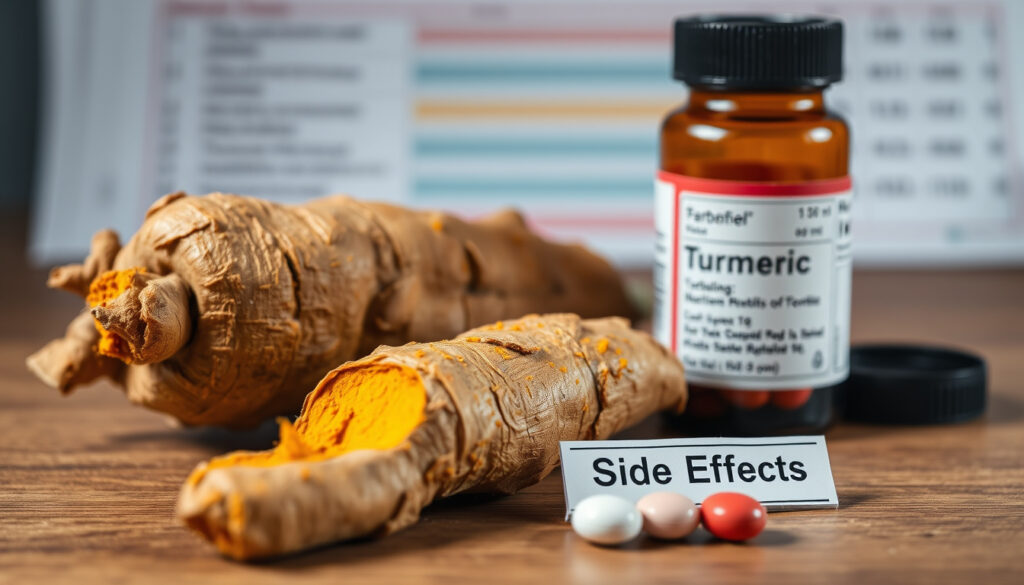
10 Serious Side Effects of Turmeric: Risks and Interactions
You might sprinkle turmeric into golden milk or stir it into curry without a second thought — but when that everyday spice reaches supplement-level doses, your body can push back. For some people, the same curcumin that stars in healthy-eating blogs can trigger stomach pain, thin the blood, or even contribute to kidney stones.
Daily high-dose turmeric linked to kidney stones: oxalate levels can exceed 100 mg per day ·
Curcumin supplements may interact with blood thinners: risk of increased INR ·
Gastrointestinal side effects reported in clinical trials: up to 30% of participants ·
Iron absorption reduced by turmeric: typical reduction 20–90%
Quick snapshot
- Digestive distress (nausea, diarrhea, stomach pain) — European Medicines Agency
- Blood thinning and easy bruising — Memorial Sloan Kettering Cancer Center
- Dangerous drops in blood sugar — LiverTox / NCBI Bookshelf
- Kidney stones from oxalate buildup — Memorial Sloan Kettering Cancer Center
- Whether turmeric directly causes liver damage in healthy individuals at moderate doses — Taylor & Francis hepatotoxicity review
- The exact safe upper limit for long-term daily intake — PubMed Central review
- If curcumin’s interaction with chemotherapy is clinically significant in humans — Memorial Sloan Kettering Cancer Center
- In a dose-response study, diarrhea, headache, rash, and yellow stool appeared within 72 hours at 500–12,000 mg curcumin — PubMed Central review
- Liver injury case reports often emerge after weeks to months of daily turmeric plus piperine — Annals of Internal Medicine: Clinical Cases
- Always consult a doctor before combining turmeric supplements with prescription drugs — LiverTox / NCBI Bookshelf
- Patients on warfarin, insulin, or antacids should avoid high-dose turmeric — Memorial Sloan Kettering Cancer Center
- Track oxalate intake if you have a history of kidney stones — Memorial Sloan Kettering Cancer Center
Six key facts in the dossier, one pattern: most serious side effects are dose-dependent and hit specific health profiles hardest.
| Fact | Value |
|---|---|
| Active compound | Curcumin (2–5% of turmeric powder by weight) |
| Common serious side effect rate | Up to 30% in clinical trials at high doses |
| Oxalate content per teaspoon | Approximately 50–100 mg |
| Safe daily dose (general consensus) | 1–3 grams of turmeric powder, or 400–600 mg curcumin |
| Duration of use in studies | Typically 8–12 weeks without major adverse effects |
| NHS advice | No official limits, but cautions about interactions and oxalates |
What happens to your body if you take turmeric every day?
Digestive upset from daily curcumin
The most frequently reported adverse events across curcumin formulations are gastrointestinal. The Frontiers in Medicine meta-analysis found abdominal pain, diarrhea, dyspepsia, nausea, and bloating to be common. In one dose-response study, seven subjects taking 500 to 12,000 mg curcumin over 72 hours reported diarrhea, headache, rash, and yellow stool (PubMed Central review). The European Medicines Agency notes dry mouth, flatulence, and gastric irritation as mild but real.
That same meta-analysis reported no statistically significant increase in adverse events with curcumin versus placebo — meaning many people tolerate it fine. The trouble appears most often at doses above 1,000 mg curcumin per day.
Blood thinning and bruising risk
Memorial Sloan Kettering Cancer Center warns that turmeric may increase bleeding risk in people taking warfarin or other blood thinners. The mechanism? Curcumin inhibits platelet aggregation and enhances the effect of anticoagulants. A case report on Drugs.com documents a transient atrioventricular block in a marathon runner who took 2–3 times the recommended turmeric dose.
Iron absorption interference
Turmeric inhibits non-heme iron absorption — the type found in plant foods and supplements. The reduction can range from 20% to 90%, according to LiverTox / NCBI Bookshelf. For someone already at risk of iron deficiency or anemia, daily turmeric supplementation could tip the balance.
Who should avoid taking turmeric?
People on blood thinners
Patients on warfarin, clopidogrel, or aspirin face an elevated bleeding risk when adding high-dose turmeric. Memorial Sloan Kettering Cancer Center advises discussing it with a clinician before starting any curcumin supplement.
Individuals with gallbladder disease
Turmeric can contract the gallbladder —
More related posts
 What Happens to KiwiSaver When You Die? A Guide for Families
 Can You Freeze Cooked Chicken? Tips & Safety Guide
 When Do Girls Stop Growing? Age, Signs & Height Guide
 Builders Risk Insurance NZ: Cost, Coverage & 10-Year Guarantee
 London Time Right Now: GMT, BST, and UTC Offset Explained
 Main Street Fish and Chips: Menu, Prices & Reviews
 Best Places to See Volcanoes: Safety, Tours & Top Destinations
 Love Island UK Season 12 – Dates, Host, Cast, Episodes
