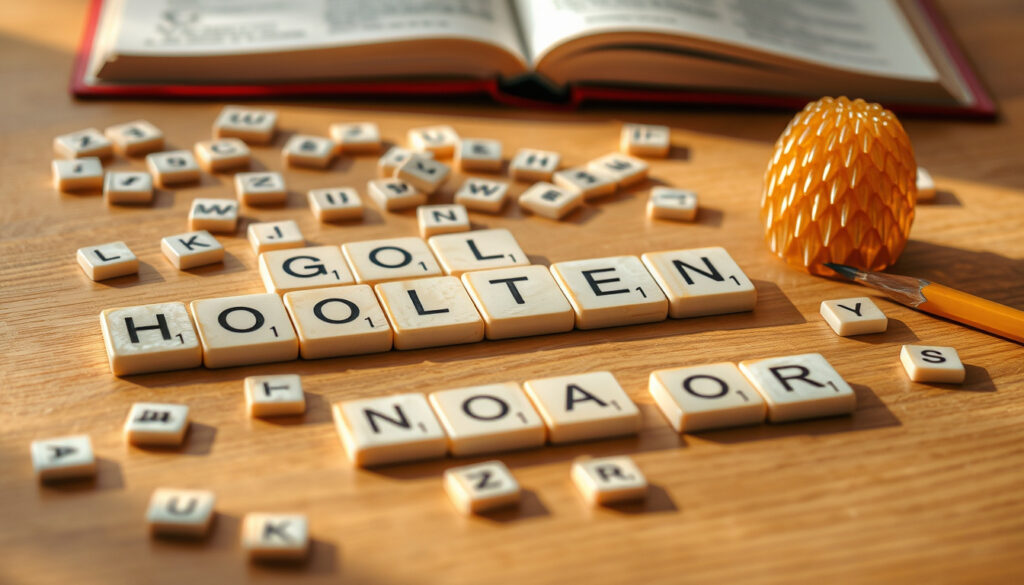
Spelling Bee Answers Today: NYT Pangram Hints & Word Lists
Counting letters in your head while the coffee cools is a familiar ritual for NYT Spelling Bee regulars. Today’s puzzle centers on B with A, L, N, O, T, and U around it, and the official NYT forum listing counts 51 accepted words worth a maximum 187 points.
Center letter: B · Words: 51 · Max score: 187 · Reported pangrams: 1 · Genius: 131 · Min length: 4 letters
Quick snapshot
- Every valid answer must include the center letter, B, per the official NYT rules.
- The official forum lists 51 accepted words and a 187-point maximum score for today. (official NYT rules)
- Whether the official NYT game page publishes the full answer list on the same day.
- Whether the reported pangram, BUTANOL, clears the perfect-pangram bar until more trackers confirm it.
- Whether every third-party hint page stays free through the season.
- A new puzzle lands daily, and hint pages refresh the same morning. (Spell Bee Unlimited)
- Yesterday’s answers stay archived for catch-up solving (Spell Bee Unlimited).
- Today’s list becomes the reference point until the next refresh. (Spell Bee Unlimited)
- Glance at the reported pangram first if you want a spoiler-light start. (NYT Spelling Bee Answers)
- Compare the word count with yesterday’s page to size up the day’s difficulty shift (NYT Spelling Bee Answers).
- A solver only needs the six outer letters plus the center letter when you decide to use one. (NYT Spelling Bee Answers)
The pattern across the four cards: official data is solid, tracker data is useful but softer, and the timeline keeps resetting every morning.
Seven numbers and a letter set define today’s challenge — the pattern worth noticing: a single reported perfect pangram against a 51-word list makes BUTANOL the one word that clears every scoring box at once.
| Fact | Today’s value | Reported by |
|---|---|---|
| Letter set | B in the center; A, L, N, O, T, U outside | Official NYT forum (linked in intro) |
| Word count | 51 (length groups total 51) | Spell Bee Unlimited |
| Maximum score | 187 | Official NYT forum (linked in intro) |
| Reported pangrams / perfect pangrams | 1 / 1 | BeeSolver |
| Genius threshold | 131 | NYTGameHint |
| Two-letter starting pairs | 11 | Today’s Spelling Bee |
| Bingo | None reported | BeeSolver hints |
| Minimum word length | 4 letters | Official rules (linked above) |
| Center-letter rule | Every answer must include B | Official rules (linked above) |
What is the Spelling Bee pangram hint today?
Today’s reported pangram is BUTANOL, a seven-letter word that uses every letter in the puzzle at least once, according to NYT Spelling Bee Answers. It is also a perfect pangram, because it uses each of the seven letters exactly once — B, U, T, A, N, O, L — a detail BeeSolver’s daily tracker repeats (BeeSolver).
How do daily pangram hints work?
- A pangram is an answer that uses all seven letters at least once.
- Hint pages usually reveal the pangram’s starting letter or its length before showing the word itself (Today’s Spelling Bee hints).
- Pangram count appears separately from the full answer list on most trackers.
That separation is the whole trick of a spoiler-free start: you learn how many pangrams exist and where they begin, but not the full answer. Today’s reported count is exactly one, and because it is a perfect pangram, the hint collapses to a single word — BUTANOL.
The pattern: one perfect pangram on a day like this compresses the hardest find into a single word. Find it, and the rest of the 51-word list feels like cleanup.
Why do solvers want the pangram count first?
A perfect pangram earns the maximum bonus and connects the two-letter hint pairs; on a 187-point board, finding BUTANOL early changes how the outer letters feel.
The pangram count is the fastest difficulty signal in the game. One pangram is the leanest possible outcome, and a perfect one funnels everyone toward the same seven letters.
What are the NYT Spelling Bee answers today?
The full reported answer list, grouped by word length, comes from Spell Bee Unlimited’s daily tracker. The groups below sum to the official 51-word count from the NYT forum — a consistency check you won’t see on most answer pages.
How are today’s answers grouped?
- By word length: four letters through eight letters.
- By starting letter: several trackers also sort alphabetically.
- By pangram status: the pangram is flagged separately so spoiler-averse readers can stop early.
The length groups are the most practical view for scoring, because every letter in a word counts toward your total.
- 4 letters (24): ABUT, BABA, BALL, BLAB, BLAT, BLOB, BLOT, BOAT, BOBA, BOLA, BOLL, BOLO, BOLT, BOOB, BOON, BOOT, BOUT, BULB, BULL, BUNT, BUTT, LOBO, NOOB, TUBA
- 5 letters (12): ABBOT, ABOUT, BANAL, BATON, BLOAT, BLUNT, BUBBA, NABOB, TABLA, TABOO, TUBAL, UNBAN
- 6 letters (10): BABOON, BALLOT, BANANA, BAOBAB, BLOTTO, BONBON, BONOBO, BOOBOO, BUTTON, UNBOLT
- 7 letters (4): BALLOON, BLATANT, BUTANOL, NANOBOT
- 8 letters (1): UNBUTTON
One nuance: NYTGameHint’s complete list omits BABA and BABOON, which Spell Bee Unlimited includes. The official 51-word count says those two belong.
What does the center-letter rule mean?
No B, no word, no score. Every accepted answer in today’s list carries a B, which is why the center letter is the first thing worth memorizing.
What this means: The center letter is the first filter for every word, making B the most important letter to remember.
What were the Spelling Bee answers yesterday?
Yesterday’s list is archived on the same trackers that power today’s page. Most daily answer pages, including NYT Spelling Bee Answers, keep the previous day’s answers online for catch-up solving, so you can compare word counts and pangram counts across consecutive puzzles.
How do I find yesterday’s answer list?
- Look for a date switcher or archive link on the answer page you used for today’s puzzle.
- Check the previous day’s hint page for its two-letter pair list and pangram count.
- Search the NYT forum thread from October 10 if you want the official counts for that day.
Comparing yesterday and today is more useful than it sounds. A jump in word count usually signals a friendlier letter set; a drop means the puzzle is playing harder.
The pattern: yesterday’s page is a calibration tool, not just a log. The day-over-day shift in word count and score is how regular solvers know whether today’s board is generous or stingy.
What should I do if yesterday’s list is missing?
- Refresh the page later — archive pages often update a day behind.
- Use a solver with yesterday’s center letter and outer letters to rebuild the list.
- Cross-check the rebuilt list against the official forum before trusting it.
If no tracker has the archive, the two-letter hints from yesterday’s hint page still give you a skeleton: pairing each starting letter with the outer letters restores a good portion of the answer set.
What this means: the archive is your difficulty meter. Use it before, not after, you open today’s list.
How does a Spelling Bee solver unscramble words?
A solver applies the same rule you’re playing under: every word must include the center letter. With today’s letters, that means B is the fixed hub and A, L, N, O, T, U are the options around it. NYT Spelling Bee Answers and similar tools rebuild the day’s list by matching every possible letter sequence against their word lists, then discarding anything that misses the center letter or the minimum length.
What letters do I enter in a Spelling Bee solver?
- Center letter: B (required).
- Outer letters: A, L, N, O, T, U.
- Minimum word length: 4 letters, matching the official rule.
Most solver pages let you toggle word length and show pangrams first. That ordering matters — a pangram is your highest-value find because it scores its length plus the standard pangram bonus.
What this means: the solver is a mirror of the rules, not a cheat engine. If it accepts words without B, it is misconfigured.
Are solver results guaranteed to be correct?
Solver dictionaries differ from site to site; today’s 51-word official count is the benchmark. If a tool returns more or fewer, treat the difference as a word-list quirk, not a new discovery.
The reliable move is to cross-check solver output against a second source. Today’s official count is 51, the tracker lists agree on the length groups, and the pangram BUTANOL appears consistently — so any tool that contradicts those three signals deserves skepticism.
How many words are in today’s NYT Spelling Bee?
The official forum listing — linked in the intro — says 51 accepted words for , and the tracker length groups above total exactly 51. Interestingly, one complete-list tracker (NYTGameHint) lists 49, omitting BABA and BABOON — proof that even “complete” lists need a second check.
How is the daily word count calculated?
- The count is the number of accepted answers in that day’s puzzle, including pangrams.
- It is not the same as the maximum score; today’s maximum score is 187.
- Word counts are published at the top of most hint and answer pages.
Scoring follows the official formula: four-letter words earn 1 point, longer words earn 1 point per letter, and pangrams add a 7-point bonus. On today’s board, that yields a 187-point ceiling — and a Genius threshold of 131, the rank most solvers aim for first.
Why this matters: the word count tells you volume, but the score tells you depth. A 51-word list with long words and a pangram is worth far more points than a 60-word list of short words.
Why is the word count different every day?
- Each puzzle uses a different letter set, and some letter sets generate more valid answers.
- The official editors curate the word list, and the list changes daily.
- Higher word counts usually mean more scoring opportunities — but the center letter still gates everything.
The implication: The word count and score ceiling together give the day’s shape.
How to work through today’s puzzle without spoiling it
- Write the day’s letters down: B in the middle, A L N O T U around it.
- Set a personal target before opening any list — Genius at 131 is a realistic goal today.
- Try the pangram before anything else. Today’s hint layer says the perfect pangram starts with BU and uses seven letters.
- If you stall, reveal the four-letter group to regain momentum.
- Save the full answer list for last, once your guesses stop flowing.
- Afterward, compare today’s 51-word list with yesterday’s archive to see how the letter set changed the game.
The trade-off: the answers are a safety net, not the game. Use them last, and the daily puzzle keeps its five-minute payoff.
Today’s Spelling Bee timeline
- — the October 11 hint and answer list are live; the pangram BUTANOL is the reference point for most trackers.
- — the October 10 archive stays online for comparison on sites like NYT Spelling Bee Answers.
- — a new puzzle publishes and hint pages refresh each morning.
- — editors and regular solvers review pangram patterns and solver trends; the rhythm shows up in word-count swings.
The rhythm is the real pattern: every day resets the board, and every tracker refresh follows the official release.
What’s confirmed and what’s still unclear
Confirmed facts
- Center letter B, outer letters A, L, N, O, T, U (official forum listing).
- 51 accepted words and a 187-point maximum score (official forum listing).
- Every valid answer must include the center letter (official rules).
- The length-grouped tracker lists sum to 51 (Spell Bee Unlimited).
What’s unclear
- Whether the pangram is definitively BUTANOL until more trackers confirm it.
- Whether the official NYT game page shows the full answer list on the same day.
- Whether third-party hint pages remain free all season.
- Why one tracker’s “complete” list omits BABA and BABOON.
- Whether the two-letter-pair total of 11 holds beyond a single hint page.
This page treats official NYT data as the anchor and marks tracker-reported details as reported. When a single tracker contradicts the official count, the official count wins.
The pattern: Official data anchors the day; tracker data fills gaps.
What the sources say
The official rules define Spelling Bee as a word game in which players construct words from preselected letters — and every valid word must include the puzzle’s center letter.
— The New York Times Help Center (official rules)
One pangram and one perfect pangram — the seven-letter BUTANOL clears the board by using every letter of the day exactly once.
— BeeSolver (daily answer tracker)
Eleven two-letter starting pairs let solvers control exactly how much help they open at once.
— Today’s Spelling Bee (spoiler-free hint page)
Read together, these three voices describe the same loop: rules set the frame, trackers fill the gaps, and hints control the experience.
Why this matters: Today’s puzzle is a 51-word board where one perfect pangram — BUTANOL — sits at the center of the strategy, and the center-letter rule makes B the key to every word. For the player chasing Genius at 131 points, the way forward is clear: try the pangram hint first, use the four-letter group for momentum, and treat the full answer list as the emergency exit rather than the starting line.
Frequently asked questions
What is a perfect pangram in NYT Spelling Bee?
A pangram uses all seven letters at least once. A perfect pangram uses each of the seven letters exactly once. Today’s reported pangram, BUTANOL, is a perfect pangram: one B, one U, one T, one A, one N, one O, and one L.
How is Spelling Bee scoring calculated?
Four-letter words earn 1 point, longer words earn 1 point per letter, and pangrams add a 7-point bonus, per the official scoring rules. Today’s maximum score is 187, and trackers put the Genius threshold at 131.
What are the official rules for playing NYT Spelling Bee?
Players construct words from the day’s seven letters. Every word must include the center letter, must be at least four letters long, and must use only the available letters. The official rules page linked above is the final authority.
Why do some words appear in Spelling Bee but not in a standard dictionary?
Spelling Bee’s accepted list is curated by the puzzle editors, so the game’s own word list is the authority. Words like BABA or BOOBOO can score even when a pocket dictionary does not list them.
Can I use yesterday’s answers to predict today’s pangram?
Not reliably. The pangram depends entirely on the day’s seven-letter set, which changes daily. Comparing yesterday’s word count with today’s helps you gauge difficulty, but it will not reveal the pangram.
What should I do if a daily answer list looks wrong?
Check the center letter first: if a list contains words without B, it is using the wrong set. Then compare the tracker’s word count with the official 51-word total. When they disagree, trust the official count.
Related reading
If game rules and wordplay are your thing, these two reads fit the same corner.
More related posts
 Fix Windows Update Error: Step-by-Step Guide
 Government First Home Grant Ireland 2025: First Home Scheme & Help to Buy Guide
 Best Toy Cars for Kids: 2025 Complete Guide & 2026 Trends
 Timaru Herald Deaths: Find Obituaries & Notices
 How to Fix a Dripping Faucet: Step-by-Step Repair Guide
 159 USD to NZD: Convert US Dollars to New Zealand Dollars
 Tom Phillips NZ: Why Did He Leave and What Happened
 Burger on a Plate: Perfect Presentation and Recipes
